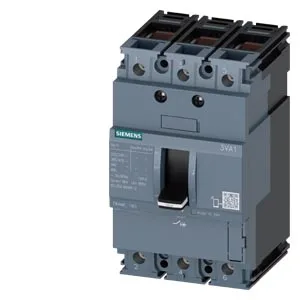
Rated 16 A continuous at 40 °C (derates to 15 A at 60 °C and above), this breaker is sized for a 16 A branch circuit in a 400 V or 480 V distribution panel. The interrupting capacity is the headline number here: 220 kA at 240 V AC, 154 kA at 415 V, 121 kA at 440 V, and still 17 kA at 690 V. For a 480 V panel fed by a 1500 kVA transformer, the available fault current can exceed 65 kA; this MCCB handles that with headroom.
The breaker measures 76.2 mm wide, 130 mm tall, and 70 mm deep — a standard 3-pole MCCB footprint that fits most Siemens SENTRON 3VA panelboards and third-party enclosures with a 3 x 25 mm busbar pitch.
What the TM210 release means for coordination
The TM210 designation indicates a fixed thermal-magnetic release with a 10x magnetic trip multiplier (the magnetic pickup is at 10 times the rated current, or 160 A for this 16 A frame). That gives good selectivity with downstream miniature circuit breakers rated up to about 16 A — the MCCB will hold during a fault on a branch MCB, letting the downstream device clear the fault first. For an electrical engineer doing a coordination study, this is the key parameter that determines whether the breaker cascades or selectively coordinates.