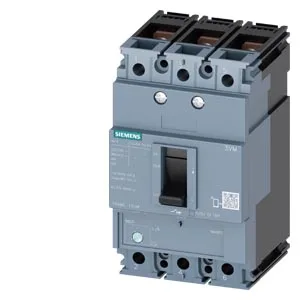
The 3VM1140-4EE32-0AA0: The interrupting ratings span the common distribution voltages: 121 kA at 240 V AC, 76 kA at 415 V AC, 53 kA at 440 V AC, and 12 kA at 500 V AC. At 240 V the 121 kA figure covers most utility-transformer fault levels without requiring a current-limiting upstream breaker.
At 55 °C it derates to 39 A, at 65 °C to 38 A, and at 70 °C to 37 A. Mounting in a sealed, non-ventilated enclosure at the top of a crowded DIN rail means you should use the 55 °C or 65 °C column for coordination, not the 40 °C line. The footprint is 76.2 mm wide (3 in) × 130 mm high × 70 mm deep — a standard 3-pole MCCB slice that fits most Siemens SENTRON panelboards without drilling new mounting holes. Front protection is IP40, so no gasket seal against washdown; keep it in a dry location or behind a gland plate.
What the TM220 release means for coordination
The TM220 designation means the magnetic (instantaneous) trip is factory-set to 220 A, which is 5.5× the 40 A thermal rating. That multiple is typical for motor-circuit protection (NEC 430.52 permits up to 800 % for a standard motor) but may be too high for a feeder protecting downstream panelboards or sensitive electronic loads. If you need a lower magnetic pickup for conductor protection, this fixed-release breaker is not the right choice — you would step to an adjustable electronic-trip version in the 3VA series.