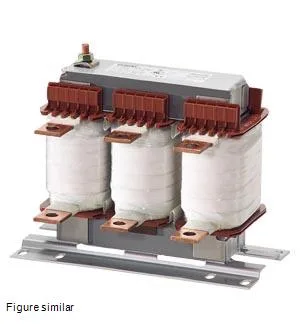
The Siemens SIDAC 4EP3807-0DK00 is a 3-phase AC output reactor (choke) rated for a maximum continuous current of 14A and an inductance of 0.3mH per phase. It's designed to sit between a variable-frequency drive and the motor, smoothing the voltage spikes and reducing the dV/dt that can damage motor windings on long cable runs. The 0.3mH inductance is sized for drives switching at 6.4kHz carrier frequency, with a minimum operating frequency of 986Hz — so it's matched to modern IGBT drives, not old 50Hz line reactors.
The 14A maximum current is the continuous thermal limit at 50°C ambient, with thermal class B insulation (130°C hot-spot). That means it can handle a 12.6A RMS motor load continuously without exceeding the temperature rise limit — the 14A figure gives about 10% headroom above the rated load current of 12.6A. The power loss splits into 46.4W in the coil and 30.5W in the iron core, totaling roughly 77W of heat that must be dissipated into the enclosure air. The IP00 protection class means it's an open-frame component — no housing, no finger-safe cover. The screw-type terminals accept standard power wiring, and the 0.12m depth by 0.17m width by 0.15m height footprint is compact enough for most drive cabinets.
Mount this output reactor on the load side of the drive, between the drive output terminals and the motor cable. The 3-phase AC design handles all three motor phases equally. For a 400V drive system at 50/60Hz line input, the reactor's 0.3mH per phase provides enough impedance to limit reflected-wave overvoltage on cable runs up to about 100-150 meters, depending on cable capacitance. The 50°C ambient rating means it can sit inside a warm drive cabinet without derating, as long as the enclosure ventilation keeps internal air below that temperature.