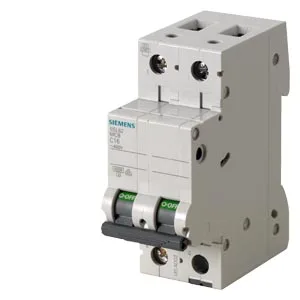
Siemens 5SL6216-6RC — 2-Pole MCB (DIN Rail)

Siemens 5SL6216-6RC SENTRON MCB, 16A, 2-Pole, B Curve, 7.5kA

MPN5SL6216-6RC
Active

Siemens SENTRON 5SL6216-6RC, miniature circuit breaker, 2-pole, 16 A, B characteristic, 7.5 kA per EN 60898, 2 MW units.

Sourced new & surplus through independent channelsAuthenticity-screened · ESD-safe packingListing updated Aug 2026

Specifications

5SL6216-6RC — Identification
ParameterValue
Product designationMiniature circuit breaker
Brand nameSENTRON
Application environmentResidential buildings/infrastructure
5SL6216-6RC — Electrical
ParameterValue
Number of poles2
Supply voltage at AC rated value415 V
5SL6216-6RC — Protection
ParameterValue
Tripping characteristic classB
Overvoltage categoryIII
5SL6216-6RC — Mechanical
ParameterValue
Modular width units2
Width36 mm
Height90 mm
Depth76 mm
Installation depth70 mm
Mounting positionany
Min.-40 °C
Max.75 °C
Protection degree (IP)IP20, with connected conductors
5SL6216-6RC — Environmental
ParameterValue
Pollution degree2
At 30 °C rated value16 A
5SL6216-6RC — Specifications
ParameterValue
At AC rated value16 A
According to EN 60898 rated value7.5 kA
With single-phase operation at AC rated value250 V
Energy Limitation ClassNo

Product details

What this MCB is and where it lands

The Siemens 5SL6216-6RC is a SENTRON miniature circuit breaker — a 2-pole, 16 A unit with a B tripping characteristic and a 7.5 kA breaking capacity rated per EN 60898. It snaps onto a DIN rail and occupies 2 modular width units (36 mm), making it a standard fit for residential and light-commercial distribution boards where the B curve protects lighting and general-purpose socket circuits against short-circuit and overload.

Key ratings and what they mean for fit

The 16 A rating at 30 °C sets the continuous load it can carry without tripping — sized for a branch circuit feeding receptacles or fixed lighting. The B characteristic means it trips at 3 to 5 times rated current (instantaneous), so it's the right choice for resistive and lightly inductive loads where inrush stays modest; avoid it on motor or transformer primaries where a C or D curve would be needed to ride through the start surge. Breaking capacity of 7.5 kA per EN 60898 tells you the maximum fault current this MCB can safely interrupt. In a residential or small commercial panel with a typical upstream transformer impedance, that's usually adequate — but if the prospective short-circuit current at the board exceeds 7.5 kA, you need a higher-rated unit or a current-limiting upstream device. Rated for 415 V AC and 250 V single-phase, with a maximum of 440 V in multi-phase operation. The 50/60 Hz frequency range covers standard mains worldwide. IP20 with connected conductors is the usual finger-safe protection for a panel interior — no washdown rating, so keep it inside the enclosure. Mechanical life of 10,000 operating cycles is typical for this class — fine for normal switching duty, but if you're cycling it daily as a disconnect under load, expect to replace it sooner. Power loss of 1.9 W per pole at rated current matters for thermal budgeting inside a densely packed enclosure; multiply by two poles for total dissipation.

Panel integration notes

Mounts in any position on a 35 mm DIN rail. Depth of 76 mm and installation depth of 70 mm leave clearance for wiring behind the rail. The 36 mm width — 2 MW — means it takes two adjacent 18 mm slots in a distribution board. Sealable for tamper-proofing after commissioning. Halogen-free and silicon-free construction avoids corrosive off-gassing in sealed enclosures. Supplementary devices (auxiliary contacts, shunt trips, undervoltage releases) can be added on the right side without increasing the pole count — useful for remote tripping or status feedback. Overvoltage category III and pollution degree 2 are standard for fixed-installation distribution boards.

Frequently asked questions

How do I get current pricing and availability for 5SL6216-6RC?

Pricing and stock levels are confirmed at quote time. Submit an RFQ through this listing; the sourcing team will return current availability and a competitive price for your quantity.

What is the difference between 5SL6216-6RC and the 5SL4363-7?

The 5SL4363-7 is a 3-pole, 63 A, C-curve MCB with a 10 kA breaking capacity, occupying 3 MW (54 mm). The 5SL6216-6RC is a 2-pole, 16 A, B-curve unit at 7.5 kA, fitting 2 MW (36 mm). They are not drop-in replacements: the pole count, current rating, and tripping characteristic differ. The 5SL4363-7 also carries an IEC 60947-2 rating of 10 kA, while the 5SL6216-6RC is rated per EN 60898 at 7.5 kA.

Will 5SL6216-6RC drop into a panel that was specified around 5SL4363-7 without rewiring?

No. The 5SL6216-6RC is a 2-pole unit (36 mm wide) while the 5SL4363-7 is a 3-pole unit (54 mm wide). The pole count, current rating (16 A vs 63 A), and tripping characteristic (B vs C) are all different. The panel would need rewiring and possibly a different busbar arrangement.

What compliance documentation does Siemens provide for 5SL6216-6RC?

The 5SL6216-6RC is certified per EN 60898-1 for breaking capacity. It is halogen-free and silicon-free. Standard Siemens documentation includes a CE declaration of conformity and a datasheet with IEC ratings. Specific RoHS/REACH declarations are available on request from the manufacturer.

MPN
5SL6216-6RC