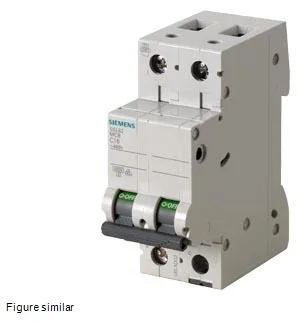
The Siemens SENTRON 5SL6263-7 is a 2-pole miniature circuit breaker rated 63 A with C-curve trip characteristic, breaking 6 kA per both EN 60898 and IEC 60947-2 at 400 V AC. That 6 kA rating is the same under both standards — no split rating to track — and the C-curve means it handles moderate inrush from motor starters or lighting banks without nuisance tripping, while still clearing a hard short inside its 6 kA ceiling. At 36 mm wide (2 modular units), it snaps onto a standard DIN rail and occupies two slots in a residential or infrastructure panel. The 76 mm depth leaves room for wiring behind the busbar, and the 70 mm installation depth matches typical distribution board cutouts.
What the ratings mean for fit
The 63 A rating on a 2-pole breaker suits subfeed or branch circuits pulling up to that load — think a small distribution board feeding lighting, socket outlets, or HVAC loads in a residential block or light-commercial infrastructure. The 6 kA breaking capacity is adequate for most domestic and light-commercial service entrances where the prospective short-circuit current stays under that threshold; if your panel has a higher fault level upstream, you'd need a higher-rated breaker or a current-limiting upstream device. Operating temperature range from -40 °C to 75 °C covers unheated utility rooms and outdoor enclosures alike. The IP20 rating (with connected conductors) means it's protected against finger contact but not against dripping water — standard for enclosed distribution boards; no washdown or outdoor exposure without a weatherproof enclosure. Power loss of 5.2 W per pole at rated current in hot operating state matters for thermal management inside a crowded enclosure — two poles dissipate about 10.4 W total, which is modest but worth accounting for if the panel is tightly packed or poorly ventilated.
Integration notes
Mounts in any position on the DIN rail — no orientation restriction. Sealable (tamper-evident seal available) for installations that need meter-seal or lockout compliance. Supplementary devices (auxiliary contacts, shunt trips, alarm switches) can be snapped on the right side without removing the breaker — useful for remote tripping or status feedback in a BMS. Halogen-free and silicon-free construction meets material restrictions for clean-room or high-reliability environments where off-gassing from a fault could damage nearby electronics.