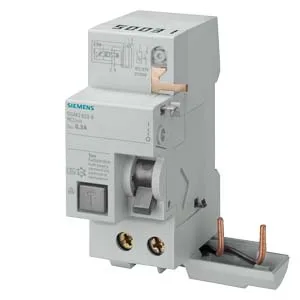
Type A detection covers sinusoidal AC and pulsating DC residual currents — the standard for most single-phase loads with electronics (switched-mode supplies, rectifiers, inverters). The 300 mA threshold is a fire-protection level, not personnel protection (that's 30 mA); it's typically used on submain or feeder circuits where a lower trip would cause nuisance tripping from leakage in long cable runs or multiple loads. Rated 63 A at AC, but the current derates with ambient temperature: 58.6 A at 40 °C, 56.7 A at 50 °C, 53.55 A at 60 °C, and 50.4 A at 70 °C. Surge current resistance 1 kA, surge voltage resistance 4000 V. IP20 with the distribution board installed and conductors connected. That's touch-finger protection on the front, but no water ingress protection — mount inside an enclosure, not in a wet location.
Mounts on DIN rail (REG fastening method), any position. 2 modular width units (71 mm wide) — fits standard 18 mm-per-module spacing. Depth 70 mm, height 90 mm. Not sealable (no padlockable toggle). Rated fault current is fixed at 300 mA — not adjustable. No OFF-delay adjustment either; it's instantaneous, so it trips within one AC cycle on a solid fault. That means no selectivity with downstream 30 mA RCDs on the same circuit unless the downstream device has a short time delay.