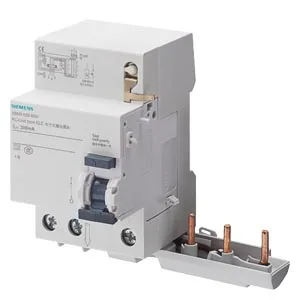
It is not rated for pulsating DC or mixed-frequency faults; those call for type A or type B units.
The 63 A rated current and 30 mA rated residual current are the two numbers that govern selection. 63 A is the continuous load the RC unit can pass through its bus bars without overheating; match it to the upstream MCB rating. 30 mA is the trip sensitivity — standard for general socket-outlet and lighting circuits where the goal is personal protection against direct contact. The 400 V AC rated supply voltage confirms it is intended for three-phase systems up to 400 V line-to-line. Surge current resistance is rated at 3 kA. For industrial panels with higher fault capacity, verify the upstream breaker's let-through energy is within this limit. This is standard for a DIN-rail residual current device; it is not a contactor rated for frequent switching under load. The RC unit is designed for occasional manual test or isolation, not daily cycling.
Occupies 3 width units — 54 mm of rail space. Depth is 70 mm, matching the 5SL4 MCB it clips to. Installation depth is also 70 mm. Terminals accept solid conductors 0.75 to 35 mm² and stranded conductors 0.75 to 25 mm². Tightening torque is 2.5 to 3 N·m — a standard screwdriver setting for this class of terminal. The power supply connects to the top, above the miniature circuit breaker. Protection class is IP20 with the distribution board installed and conductors connected. That means finger-safe against accidental touch but not sealed against moisture or dust. Suitable for indoor panel mounting only.