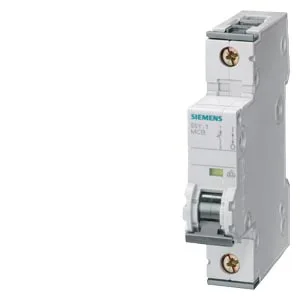
Key ratings and what they mean for your panel
The 25 A rating at 35 °C is the headline figure, but the derating curve is what matters when the breaker sits in a warm enclosure: at 40 °C it carries 22.98 A, at 50 °C it drops to 20.72 A, and at 60 °C it is down to 18.22 A. If your panel ambient runs above 35 °C, size the load to the derated value, not the nameplate. The B characteristic (3–5 × In magnetic trip) is standard for resistive and general-purpose loads where nuisance tripping from inrush is not a concern — lighting circuits, small transformers, and control power feeds are typical. The 10 kA breaking capacity per EN 60898 means it safely interrupts a fault current up to that level; for systems with higher prospective fault current, a current-limiting upstream device is needed. Energy limitation class 3 indicates the let-through energy is low enough to protect downstream equipment in most coordination schemes.
Environmental and compliance notes
Halogen-free and silicon-free construction matters in railway and aerospace applications where outgassing can damage sensitive contacts or optics. The sealable design allows the installer to lock the toggle position with a padlock or wire seal, preventing unauthorized operation on critical circuits. Touch protection is integrated on the terminals, so accidental contact during maintenance is minimized. The operating temperature range of -40 °C to 75 °C covers cold-start conditions in unheated substations and hot enclosures near machinery. Humidity limits are specified: 95% RH at 55 °C, derating to 35% RH at 75 °C — relevant for tropical or washdown environments where condensation is a risk.