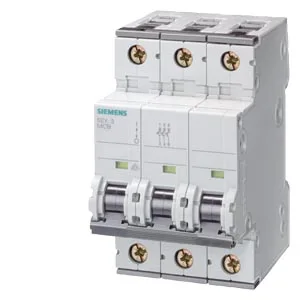
Rated for 400 V AC (440 V max multi-phase) and 60 V DC, it carries a 15 kA breaking capacity per EN 60898 and a 50 kA rating per IEC 60947-2 — the higher figure is the one that matters for industrial fault-current coordination. The C-curve (5–10× In) handles motor-starting inrush and moderate inductive loads without nuisance tripping.
Breaking capacity and standards — what the ratings mean
The dual breaking-capacity rating is the key spec: 15 kA at 400 V AC per EN 60898 covers residential/commercial panel duty, while the 50 kA per IEC 60947-2 at 400 V AC is the industrial rating — it tells you this breaker can clear a fault on a high-capacity transformer or busway without welding its contacts. At DC (60–72 V) it's rated 15 kA per IEC 60947-2, which covers most battery-bank and UPS branch circuits. It also carries a UL 1077 / CSA C22.2 No. 235 listing at 5 kA, which qualifies it as a supplementary protector for North American panels where the main breaker provides the branch-circuit fault rating. The IEC/EN 60898-1 and IEC 60947-2 certifications cover the European and global installations.
Physical fit and environmental range
Dimensions: 90 mm high, 54 mm wide (3 MW), 76 mm deep, with a 70 mm installation depth behind the panel. The quick-assembly fastening system clips onto a DIN rail without tools. Ambient temperature range from -40 °C to +75 °C, with humidity derating above 55 °C (95% RH at 55 °C, tapering to 35% at 75 °C). Halogen-free and silicon-free construction, sealable for lockout/tagout.