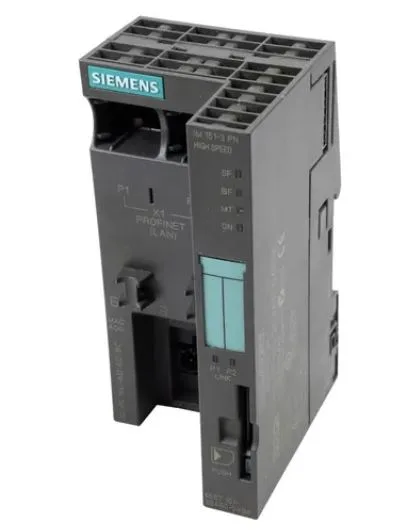
Head module in one paragraph
The 6ES7151-3BA60-0AB0: The PROFINET stack on this head carries IRT, MRP, LLDP, ARP, SNMP and PROFIenergy, with prioritized startup and shared-device mode — that combination is what makes it usable on a mixed motion-and-standard line rather than only a basic remote I/O drop. Diagnostics surface as the standard BF (red, bus fault) and SF (red, group error) LEDs, a LINK LED per port, and an alarm channel into the controller via dataset.
What the ratings actually gate
Supply draw peaks at 200 mA from 1L+ with 20 ms of stored energy; Ethernet-to-electronics isolation tested at 500 V. The module itself does not isolate the backplane bus from the electronics nor the supply from the electronics — that isolation has to live in the chosen power module and the I/O modules behind it, which is worth confirming before stacking in a noisier cabinet. Per-module I/O budgets are 256 byte input and 256 byte output, which lines up with what the standard ET 200S power modules can feed — going beyond that is a station design issue, not a head-module issue.
CE and UL approvals are marked on the device, which is what the documentation buyer needs to clear a customs or end-customer audit on a European or North American machine.