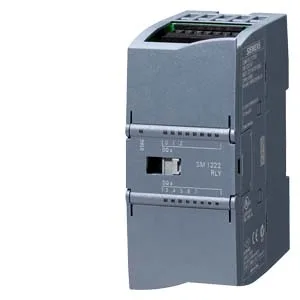
The 6ES7222-1HH30-0XB0: This is a 16-channel relay output module for the Siemens S7-1200 family. Each output switches up to 2 A on resistive or inductive loads, covering 5–250 V AC and 5–30 V DC. That means you can drive contactor coils, solenoid valves, small motors, or indicator lamps straight off the PLC without an intermediate relay bank. Rated IP20, so it lives inside a cabinet away from direct spray. On lamp loads, it handles 30 W DC or 200 W AC—enough for pilot lights and beacon stacks. Each output also does diagnostic alarm reporting, so the PLC can tell you when a relay coil is open or a fuse blows.
Width is 45 mm, depth 75 mm, height 100 mm—it takes up one standard S7-1200 slot width. The module needs a front connector (not included) for the field wiring; order that separately. All 16 outputs share a common rail, so keep return wiring tidy. Coil draw per relay is 11 mA from the 24 V DC load supply. Unshielded cable runs can go 150 m; shielded up to 500 m—good for remote valve islands or motor control centers. Short-circuit protection must be provided externally; there's none on board. Mount it vertical or horizontal, but note the derating: max ambient 45 °C in vertical orientation, down from the full 70 °C. Horizontal gives you the full range.
How it compares to a combo I/O module
The closest sibling people ask about is 6ES7223-1PL32-0XB0—a 16‑input / 16‑output combo. That one has inputs on the top half and transistor outputs on the bottom, not relays. If your panel was wired for the combo, dropping this pure‑relay module in means redoing the IO wiring: the pinout and voltage range are different. The combo runs 24 V DC only; this one switches AC too, so they fill different roles. No shortcut swap.
Sourcing and compliance package
We can confirm fit against your BOM line using the ratings above. Compliance marks: CE, FM, and RCM (formerly C‑TICK) are on the nameplate. No RoHS or UL statement is in the available spec sheet, so check your local acceptance requirements before freezing the line item.