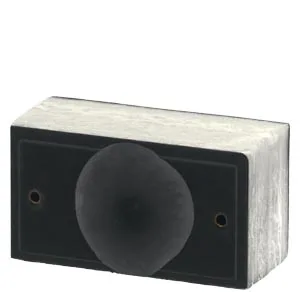
The Siemens 6GT2810-2HF10 is a SIMATIC RF671T UHF RFID transponder from the RF67xT family, designed for passive identification in harsh industrial environments. It operates on the FCC frequency band of 902 to 928 MHz and complies with ISO 18000-63 and EPC Class 1 Gen 2 standards. The tag carries an Impinj Monza R6-P chip with 128 bits (16 bytes) of EPC memory and 32 bits (4 bytes) of user memory. This is the version intended for gluing onto metal surfaces — the FR4 package measures 10 x 5 x 3 mm and is rated IP67, meaning the tag body and antenna survive washdown and particulate ingress.
Signal integrity and mounting reality
The tag is designed for direct metal mounting — the FR4 substrate and antenna tuning account for the detuning effect of a metal surface, so you don't need a spacer or foam pad. Glue it with a high-temperature epoxy rated above 175 °C; cyanoacrylate will outgas and fail in the first heat cycle. Heat-resistant printing is not possible on this variant, so label the carton, not the tag. At 902-928 MHz, read range depends on the reader antenna gain and local RF environment. Expect reliable reads inside a 2-4 meter zone with a 6 dBi circular-polarized antenna in a clean plant. Metal behind the tag is fine; liquid or foil-lined containers in the read path will kill the signal — it's noise till proven otherwise, so test the read point with a handheld before committing the conveyor layout.