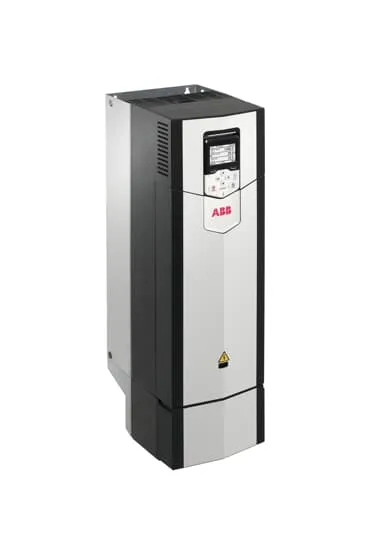
What the order code resolves to
The ACS880-01-075A-2+B056+E200+H358+L537+Q971+R700: Mass reads 6.80 kg for this configured frame, which puts it inside the compact single-drive handling class — light enough to lift onto a backplate without a hoist, heavy enough that the panel builder should still allow for the heat-sink clearance the ACS880 series expects. Brand lineage stays ABB, so the commissioning toolchain, parameter file format and option-key decoding all follow the ACS880 standard — useful when a replacement needs to inherit a backup image rather than be re-parameterised from scratch.
Sourcing posture
Configured ACS880-01 strings like this one are specified into the BOM and quoted to order; the +056/+E200/+H358/+L537/+Q971/+R700 suffix stack is what makes each unit distinct from the bare 075A-2 base, so the order string is what should travel on the RFQ line.
Integration call-outs for a hot-strip mill
Specifying an ACS880-01 in a panel next to megawatt drives means watching common-mode noise on the encoder and feedback cable runs and keeping the control wiring well away from the power lead — the ACS880 platform is built for that environment, but the option stack on this code (+B056, +E200, +H358, +L537, +Q971, +R700) is what defines which feedback and I/O boards are present, so the panel layout has to follow the actual configured face, not the base-frame drawing. Frame mass of 6.80 kg is light enough for one person to set on the backplate, but the heat sink still wants the airflow gap the ACS880 installation guide calls for — derating kicks in when that gap is closed in, and on a mill floor where cabinet intake air already runs warm that is the curve that actually decides continuous output, not the nameplate figure.