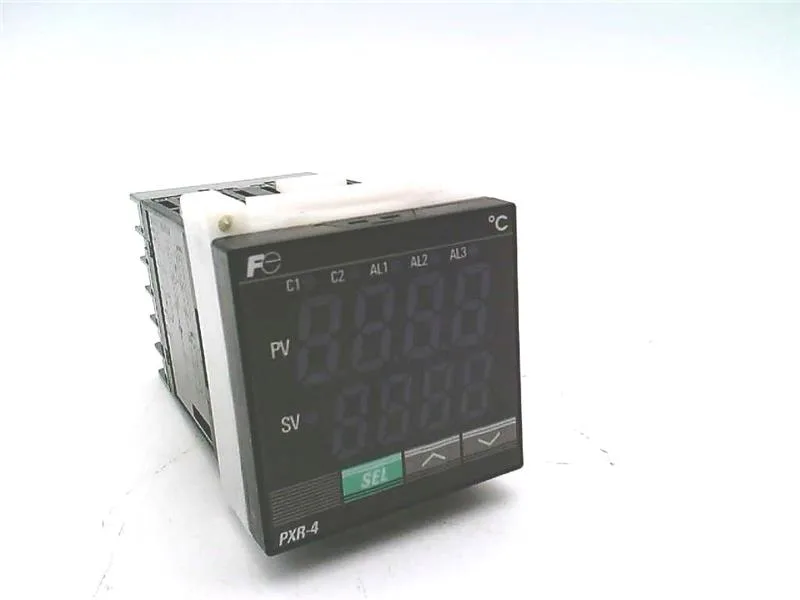
What the displays and communication mean for your panel
The Fuji PXR4TAY1-1V000 is a digital temperature controller from the PXR4 series, carrying a 13mm PV (process value) display and an 11mm SV (set value) display — readable from a few metres across a panel face, which matters when an operator is walking a line of ovens or chillers and needs to spot a deviation without stepping up to each unit. RS485 communication supports both MODBUS and Fuji's Z-ASC protocol, selectable by configuration — so it drops into a MODBUS RTU network natively, but also speaks the older Z-ASC if the site has legacy Fuji PLCs or SCADA that expect that frame. A digital input is available, triggered by an external switch or similar dry contact, and can be assigned to functions like SV selection or other events — useful for locking out setpoint changes or switching between recipes without entering the menu.
Control functions and alarms
The controller handles both heating and cooling control, and can adapt to step self-heating performance — meaning it manages zones that alternate between heat and cool demand, such as a mould temperature regulator or a chamber that cycles. A heater break alarm is built in, which detects open-circuit or partial failure in the heater load — the kind of fault that, if missed, can ruin a batch or let a process drift before the operator notices. Multiple alarm functions are configurable: delay action, excitation/non-excitation switching, and lock combination — so you can set latching alarms that need a manual reset, or delayed alarms that ignore brief transients on startup.