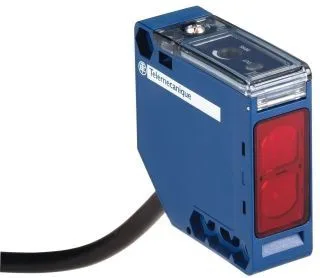
XUK1ARCNL10 retroreflective sensor with relay output rated at 3 A and 7 m range, operating on 20 to 240 VAC/VDC, and includes a 10 m cable. Output is configurable NO/NC with five wires, which means one sensor covers both fail-safe and normal-open logic without extra relays. The enclosure is IP65 and NEMA 4/4X/12/13 — sealed up tight against coolant splash, dust, and washdown. Plastic body, so it's lightweight and won't rust out on the line. Three LEDs on top tell you what's happening: yellow for output, red for stability, green for power. That's handy when you're troubleshooting from a ladder or a lift.
How It Compares to XUK1ARCNL2
The closest sibling in the XUK family is the XUK1ARCNL2. Both are retroreflective, both have relay outputs rated 3 A, both sense at 7 m on 20-240 VAC/DC, and both use the same 50x50 mm plastic housing with a 5-wire NO/NC output. Same approvals, same enclosure rating. The real difference is the cable. The XUK1ARCNL10 ships with a 10 m cable; the XUK1ARCNL2 comes with a 2 m PVR cable. So if you already specced the -ARCNL2 for a panel and the run needs more length, this one drops right in — same wiring, same footprint — and saves you a splice or a junction block. The -ARCNL2 also has a PBT body vs. plain plastic on this one, but the environmental rating is identical.
Compliance is covered: UL, CSA, and CE listed. No RoHS or REACH details are on the spec sheet, but the approvals cover the major electrical and safety standards for industrial use.
The rectangular body mounts through two holes on a 50x50 mm footprint — same pattern as every XUK block sensor. You can bolt it to a bracket or drill a panel. The 10 m cable is PVC-jacketed, good for cable-tray or flex-conduit, but keep the bend radius reasonable; it's not a robot cable. Wire it per the 5-wire scheme: two for power (AC/DC universal), three for output (common, NO, NC). The relay is rated 3 A resistive — enough for a small contactor coil or a pilot light, but don't plan on switching a motor directly. With 25 ms response time, it's not for high-speed counting, but it'll catch a box on a conveyor or a pallet in a rack.