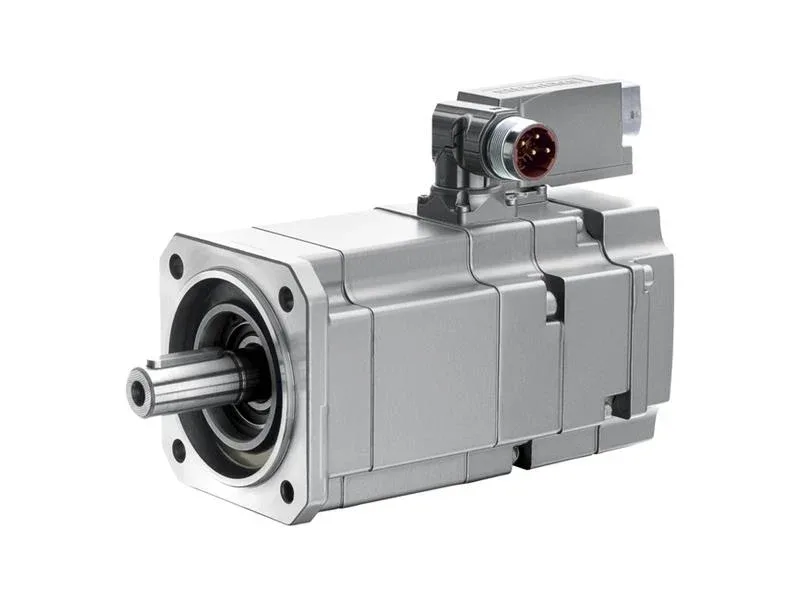
0.5 kW SIMOTICS S motor on the EOL hot-runner list
The Siemens 1FK7032-2AK7.-.... is a SIMOTICS S 1FK7-CT synchronous servo motor rated 0.5 kW with a 600 VDC link, 1.15 Nm continuous stall torque (100 K) and a 6000 rpm rated speed, naturally cooled. It sits in the compact 1FK7 frame family — the small-footprint servo that pairs with a SINAMICS S120 drive module to make a positioning axis on a machine or a small conveyor. The line is flagged EOL/hot-runner, which on Siemens' vocabulary means the part is past end-of-production but still orderable while remaining stock is drawn down — no new units are being built. For an existing axis, this is a drop-in continuation; for a new build, the procurement team should read it as a last-time-buy window against the surplus channel rather than a guaranteed long-tail catalog line.
What 1.15 Nm at 6000 rpm buys you on a real axis
1.15 Nm at 6000 rpm puts this 1FK7 squarely in the small-format pick-and-place / indexing / small-feed-roll class — enough torque for a labelling head, a small pump drive, a belt conveyor take-up, or a screw-down axis where the mechanical demand is below roughly 0.5 kW continuous. The naturally cooled frame (no integral fan) means thermal headroom drops off faster at higher duty cycles than on a force-ventilated sibling; the 100 K winding figure is the boundary, not a perpetual operating point. Pair the 600 VDC link with a SINAMICS S120 Smart Line Module or similar DC-bus supply and the motor runs on a standard 400–480 V three-phase input — the 600 V figure is the intermediate-circuit rating, not a mains voltage. Encoder and brake options are resolved in the trailing dots of the order code (the dot-string after the dash), which a controls integrator should match to the existing drive project before committing the BOM line.
Sourcing posture for a hot-runner EOL motor
With the lifecycle flag at EOL/hot-runner, the genuine supply channel is independent distribution: new-surplus and factory-pull stock from the remaining Siemens warehouse draw-down, plus legacy inventory held by specialist brokers. Quotation is line-by-line against the RFQ — there is no scheduled production replenishment behind the order code, so volume pricing reflects whatever sealed, traceable stock is available at quote time. A tail-spend buy through a preferred-supplier punch-out is unlikely to resolve this code on a catalog click — the line is too far down the phase-out curve for mainstream catalog stocking. The procurement move is to consolidate the RFQ with any other 1FK7 hot-runner codes on the same panel, lock down the lot and date code at quote, and confirm nameplate traceability (Siemens factory build sheet / original packing) before the PO is released.