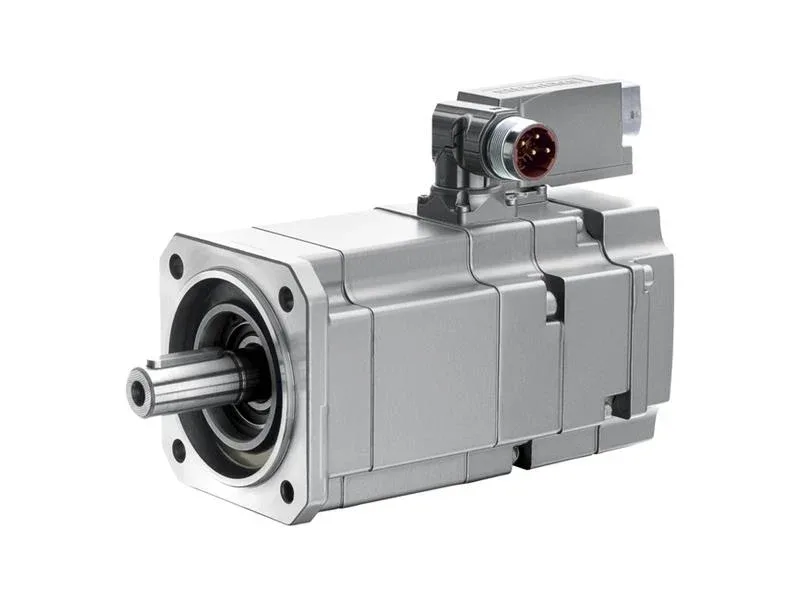
3.1 Nm / 1.23 kW / 4500 rpm in a 1FK7 stator
The Siemens 1FK70434CH711QG0 is a compact three-phase synchronous servo from the SIMOTICS 1FK7 line — 3.1 Nm continuous stall torque with a 1.23 kW mechanical rating at 4500 rpm. That combination puts it in the high-pole-count, low-inertia corner of the family: pair it with a SINAMICS S120 or S210 drive module, encoder and resolver feedback resolved through the motor connector, and confirm the rated point on the speed-torque curve against the application duty cycle before sizing. Lifecycle is flagged EOL hot: the part is still moving through last-time-buy or hot-stock channels while the platform is wound down. Independent distributors quote it against an RFQ rather than from a published catalog line; lead time and lot traceability are confirmed at quote time, not on the page.
Where this stator lands in a panel or machine
1FK7-series synchronous servos of this frame are typically specified where positioning bandwidth and dynamic stiffness matter more than continuous torque — small CNC auxiliary axes, indexing tables, high-speed pick-and-place modules, and the feed/spindle-drive pair on a converted tool-room mill. The motor body is the standard SIMOTICS shaft-and-flange interface for this stator length; the holding-brake option (resolver / absolute encoder variant) is part of the order-code suffix and must be confirmed against the BOM before quoting. Pairs of SIMOTICS servos from the same frame family — 1FK7042-5AF71-1DB0, 1FK7042-5AF21-1UA0 and 1FK7042-5AK71-1KG3 — are nearby entries in the same family tree. They share the 1FK7 mounting envelope but differ in stack length, rated torque and feedback option; a panel that was originally specified against one of those codes may not be a direct drop-in for the 1FK70434CH711QG0 — the order-code suffix and the drive-side parameter block both have to match the substituted motor.
Sourcing posture for an EOL-hot stator
Most quotes arrive as lot-specific offers tied to the available factory-pulled or surplus inventory; pricing and date-code traceability are both confirmed at RFQ time. Lead-time stability on EOL-hot parts is exposure-dependent — request the date code, the test report, and the encoder / brake configuration in writing before committing the BOM line.