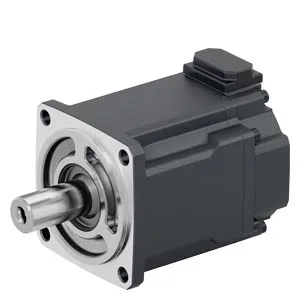
S-1FL2, sized for S200 — what the nameplate carries
Siemens 1FL2104-2BF11-0SC0 is a SIMOTICS S-1FL2 low-inertia servomotor, built to mate with the SINAMICS S200 drive family. The shaft-height-40 mm frame delivers 0.75 kW at 3000 rpm with a 2.4 Nm continuous rating — so on a small packaging or pick-and-place axis it sits in the sweet spot between a stepper and a mid-frame induction servo, with no derating trade-off against the holding brake. Holding brake fitted and a plain shaft with tolerance N keep the mechanical side simple — no keyed stub to chase on install. The 21-bit absolute encoder on a hybrid AS21 connector reports position back to the drive without a separate battery box; that's the wiring decision the commissioning engineer cares about, because one cable carries power, brake control and resolver feedback.
What the IP65 rating means on the shop floor
IP65 with oil sealing on the 1FL2104-2BF11-0SC0 means the body and cable exit survive water-jet washdown and cutting-fluid splash — not full submersion, but enough for a food-pack line guard-rail mount or a wet-machine tool zone. The hybrid connector is the wet-end barrier; that gland must be seated against the matching S200 drive-side lead or the rating collapses at the joint.
Lifecycle and supply posture
Lifecycle stage is recorded as current and product status is Active, so the 1FL2104-2BF11-0SC0 is on the live production line as a Class C made-to-order item — not stocked in standard packaging lots, but built and shipped against confirmed orders. That posture shapes how it is quoted: build configuration, quantity, and lead time all confirm at RFQ through independent industrial distribution.
Compliance and documentation trail
Export control flags sit at AL:N / ECCN:N, so cross-border shipment paperwork stays standard rather than triggering a licence review. The part ships as a single piece in a 382.00 x 222.00 x 240.00 mm pack on a quantity unit of 1 — for a multi-axis build, plan pallet and crate dimensions around that carton footprint when staging cells, not per-motor dimensions, because the motor itself is the smaller half of the volume.