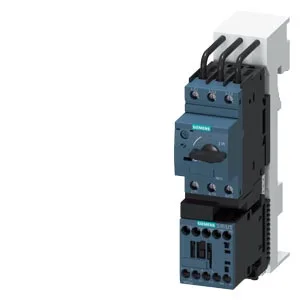
The 3RA2110-0CD15-1BB4: The AC-3 rated current at 400 V is 0.25 A, which aligns with the motor full-load current for that power band — the starter is sized for the load, not the contactor alone. The thermal overload relay is bimetallic, Class 10 trip characteristic. The coil is electromechanical, so expect a DC-powered contactor pull-in with a holding power that is lower than the pick-up surge.
S00 frame, 60 mm busbar snap-on mounting
The physical envelope is 155 mm deep, 45 mm wide, and 203 mm tall. It snaps directly onto 60 mm busbar systems — no separate mounting plate needed. The fastening method is a spring-loaded clip that engages the busbar profile; vertical mounting position is specified. Clearance distances: 50 mm upwards, 20 mm forwards, 20 mm at the side, 10 mm downwards, 0 mm backwards. The zero backwards clearance means it can sit flush against a panel backplate — useful when routing cables behind the busbar.
Supplied components and wiring
The starter ships as a pre-assembled unit containing the contactor 3RT2015-1BB41, the link module 3RA1921-1DA00, and the busbar adapter 8US1251-5DS10. The ambient operating range is -20 to +60 °C with temperature compensation active across the same band. No PROFIsafe or PROFINET IO protocol is integrated — this is a conventional hard-wired starter, not a fieldbus-controlled motor starter. For networked applications, the separate SIRIUS 3RA6 or 3RK3 motor starters with IO-Link or PROFINET would be the relevant family.
Compliance and lifecycle — active production, documented RoHS
The operating temperature range of -20 to +60 °C with temperature compensation ensures the bimetallic overload relay tracks motor heating across the ambient envelope. Storage and transport temperature range is -50 to +80 °C — the unit can sit in unheated warehouses or shipping containers without damage, as long as it is in its original packaging.