AC-3 ratings and trip class — what they mean for motor starting
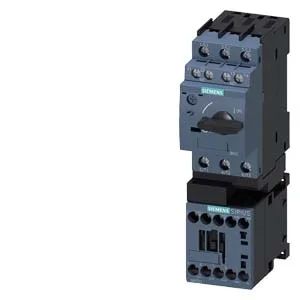
The 3RA2115-1CA16-2BB4-ZX95: At 480 V it also carries 2.5 A, and at 600 V the same — so the current limit stays flat across the common North American voltages. That's the standard for standard-duty motor starting — it lets the motor accelerate through the inrush without nuisance tripping, but still protects against a locked rotor. If your application has a long acceleration time (high-inertia loads like fans or centrifuges), you might need a Class 20 or 30 starter instead.
Mounting and integration — 45 mm footprint on 35 mm DIN rail
This starter mounts on a 35 mm DIN rail via screw and snap-on fastening, with a width of 45 mm — that's a single S00 footprint. The depth is 97 mm, height 167 mm. Clearance requirements: 50 mm above, 20 mm in front, 10 mm below, 20 mm at the sides, zero behind. That 0 mm rear clearance means it can sit flush against a back panel, which helps when you're packing components into a shallow enclosure. The supplied contactor is a 3RT2016-1BB42 and the link module is 3RA1921-1DA00 — so the starter ships as a pre-assembled combination of contactor and overload relay, wired through the link module. The main circuit uses screw-type terminals, which is the standard for panel wiring with ring or fork lugs. Mounting position is vertical only.