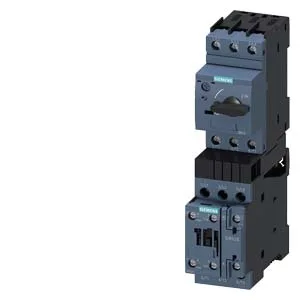
What the 29 A AC-3 rating means for motor starting
The 3RA2120-4EA27-0FB4: The AC-3e rating at 400 V also 29 A extends the same capability with enhanced electrical life for high-cycle applications like conveyor or pump starts. At 480 V and 600 V the current rating sits at 27 A — the reduction reflects the higher arc energy at elevated voltages, which is the real limit on contact life, not the thermal capacity of the bimetal.
Class 10 trip — why it matters for your motor
Class 10 means the overload relay trips within 10 seconds at 600% of the set current — fast enough to protect most standard motors from locked-rotor heating without nuisance tripping on normal starts. For high-inertia loads like fans or flywheels that need a longer acceleration ramp, Class 10 can trip during start — in that case you'd step up to a Class 20 or Class 30 overload, but this starter is factory-set for Class 10.
Panel fit — DIN rail footprint and clearances
The S0 frame measures 45 mm wide, 193 mm tall, 107 mm deep — it occupies one 45 mm DIN slot and needs 50 mm clearance above for cable entry and heat rise, 20 mm forward for door swing, and 20 mm at each side for adjacent devices. Main circuit wiring uses screw-type terminals, which are field-friendly for stranded wire with ferrules — torque specs follow the standard S0 terminal values in the Siemens manual.
Inside the package — contactor and link module
This starter ships as a pre-assembled unit containing the 3RT2027-1FB40 contactor and the 3RA2921-1BA00 link module — no separate overload relay to order or wire. The 24 VDC coil is standard for modern PLC-based panels — no need for an AC coil with a separate rectifier. Type of assignment 2 coordination means the starter coordinates with a backup fuse or circuit breaker to limit let-through energy during a short circuit — the upstream protective device must be selected per Siemens coordination tables to maintain Type 2.