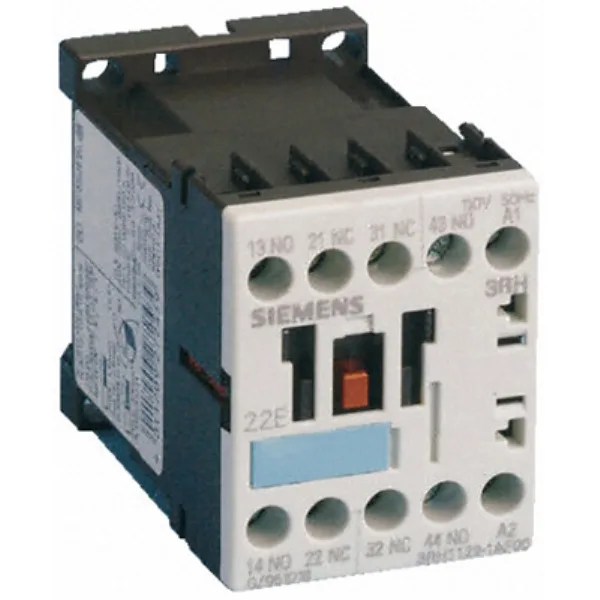
The 3RH1122-1AF00-ZW96 is a Siemens SIRIUS auxiliary contactor in the Size S00 frame — the compact footprint that shares the same 45 mm width and DIN-rail clip as the 3RT1 contactor series it pairs with. It carries two normally-open and two normally-closed instantaneous contacts (no leading or delayed poles), rated for switching at 24 V up to 10 A and at 230 V up to 6 A, with a surge voltage withstand of 6 kV. The operating range is -25 to +60 °C, storage and transport from -55 to +80 °C, and it handles 10g / 5 ms shocks, so it's at home on a conveyor line or a machine tool that sees vibration.
The 10 A at 24 V rating is the headline figure for DC switching — that's the current the contacts can make and break in a DC-13 solenoid load at 24 V. At 110 V AC the rating drops to 1 A, at 230 V AC it's 6 A, at 400 V AC it's 3 A, and at 690 V AC it's 1 A. These are the thermal current ratings for the contact block; the actual switching capacity depends on the load power factor and whether you're breaking motor inrush or resistive heater current. For a 24 VDC pilot circuit feeding a PLC input or a relay coil, the 10 A figure gives ample headroom. For a signal-level application like a safety gate feedback contact, this contactor will outlast the machine.
Wire termination and panel integration
The screw terminals accept solid conductors: two wires of 0.5 to 1.5 mm², two of 0.75 to 2.5 mm², or a single 4 mm² per clamp. That's enough for daisy-chaining the common feed through the contact block without a separate terminal strip. The 72 mm depth is the space behind the panel face — account for that when you're laying out the DIN rail against the gland plate or a backplane bus.
This is a quoted-to-order part through our desk. The 3RH1 auxiliary block shares components with the 3RT1 power contactor family. For a panel built with a 3RT1015-1AG61, the 3RH1122-1AF00-ZW96 is the correct auxiliary block — same Size S00 footprint, same DIN-rail clip, same wiring range.