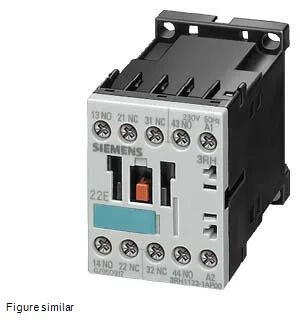
It carries 2 normally-open and 2 normally-closed instantaneous contacts, rated 10 A in AC-12 duty (resistive loads at 24 V), with a rated insulation voltage of 690 V and surge voltage resistance of 6 kV. The S00 frame size (45 mm wide, 57.5 mm tall, 72 mm deep) fits standard DIN-rail enclosures and is designed for screw or snap-on mounting on a 35 mm rail.
The 10 A AC-12 rating at 24 V is the resistive-load current limit for the auxiliary contacts — it governs how many pilot devices (relays, PLC inputs, indicator lamps) you can switch per contact. At 230 V the contact rating drops to 6 A, and at 400 V to 3 A, so derate accordingly when driving contactor coils or solenoid valves across line voltage. The 2 NO + 2 NC contact arrangement is fixed; there are no make-before-break or delayed-switching options on this variant. The S00 size and 45 mm width mean it occupies a single 45 mm module on a DIN rail — standard for panel layouts where space is tight. Wire termination accepts solid conductors from 0.5 mm² up to 4 mm² (or AWG 20–12), with two wires per terminal for daisy-chaining.
Shock resistance is 10g / 5 ms and 5g / 10 ms.