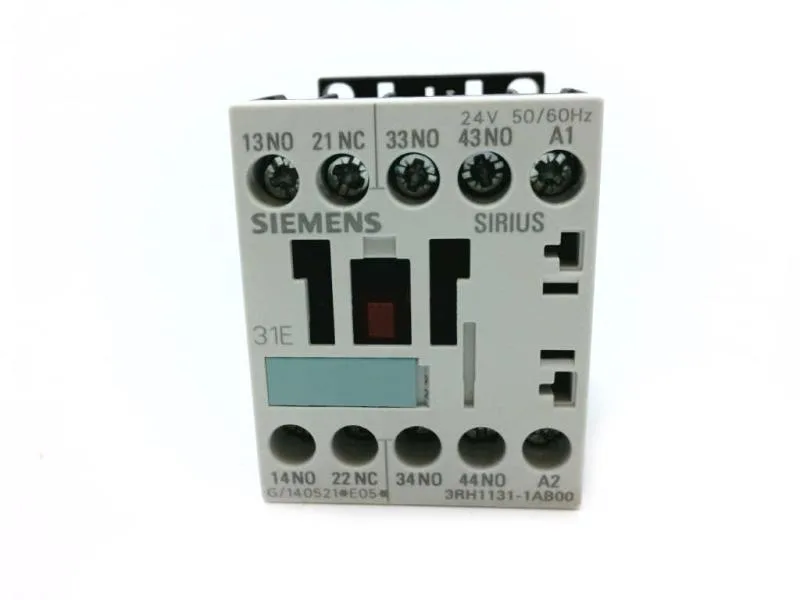
The Siemens 3RH1131-2HB40-ZX95 is a SIRIUS coupling relay designed for switching auxiliary circuits in control panels. It's the relay you grab when a PLC output needs to drive a contactor coil, or when you need to isolate a low-current signal from a higher-power load. The 24 V DC coil pulls in at 0.7 of rated voltage and holds at 2.3 W — same power closing and holding, so no thermal derating worry on sustained energization. Three NO instantaneous contacts handle the switching, rated 10 A at 24 V, 6 A at 230 V, and 3 A at 400 V. That covers most auxiliary loads — indicator lamps, small contactor coils, solenoid valves — without needing a separate interposing relay. No make-before-break or delayed contacts here; it's straight on/off switching.
Panel Integration — DIN Rail and Wiring
Mounts via screw and snap-on to standard DIN rail. Terminals accept 2x 0.25 to 2.5 mm² solid wire (or 24 to 14 AWG). IP20 on the front keeps fingers out, but it's not sealed; mount inside an enclosure rated for the environment.
Shock resistance is 10g for 5 ms and 5g for 10 ms — tough enough for conveyor lines and machine tools.