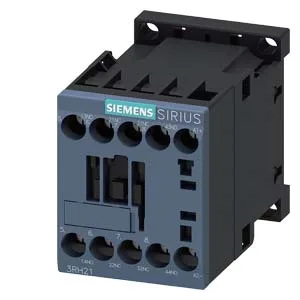
Switching capability — what the DC ratings actually mean
This contactor carries a full set of DC switching ratings across common control voltages: 10 A at 24 V DC, 4.7 A at 60 V, 3 A at 110 V, 1.2 A at 220 V, and 0.26 A at 600 V. These are not continuous carry currents — they're the make/break ratings for resistive DC loads. If you're switching solenoid valves or DC motor brakes at 24 V, the 10 A rating gives you headroom for a typical 2-3 A holding coil; at 110 V the 3 A limit means a single large contactor coil is fine, but paralleling multiple loads needs a check. That's fast enough for a pick-and-place cycle or a high-speed packaging line interlock.
That 6 mm side gap is tighter than some contactors; if you're packing them side-by-side on the rail, you can run them at the minimum without derating for heat dissipation from the coil, as long as ambient stays under 60 °C. Terminals accept 2 x (0.5 to 1.5 mm²), 2 x (0.75 to 2.5 mm²), or 2 x 4 mm² solid or stranded — spring-cage or screw terminals depending on variant.