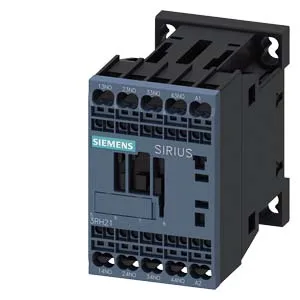
The contact ratings tell you what this contactor can actually switch under load. At 24 V it's rated 10 A, at 230 V it's also 10 A, and at 400 V it drops to 3 A. Those are the AC-1 resistive load figures — the numbers that govern how much current the contacts can make and break without welding. If you're switching a motor starter coil or a small solenoid bank at 230 V, the 10 A rating gives you headroom; at 400 V you're limited to 3 A, so size your downstream loads accordingly. That mechanical life figure means the armature and spring assembly will outlast most panels — you'll wear out the coils or contacts before the frame gives up.
Deployment context and environment
It's rated for operation from -25 °C to +60 °C and storage from -55 °C to +80 °C, with a degree of pollution 3 rating. That gives a panel builder options when the gland plate is tight.