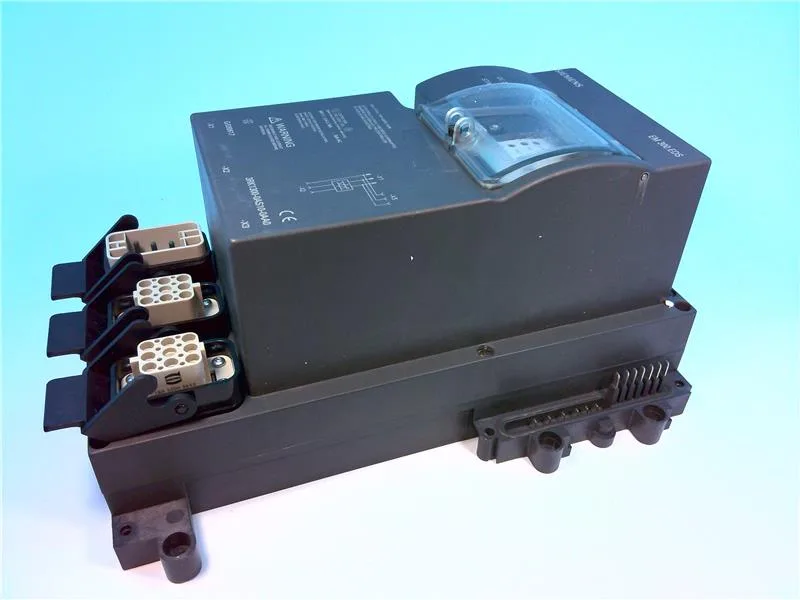
The 3RK1300-0CS01-0AA4 is a Siemens SIRIUS EM 300 DS electromechanical direct starter designed for the ET 200X distributed I/O system. It integrates motor starting, bimetal overload protection, and a brake output into one IP65-rated enclosure — no separate contactor/overload/brake relay stack needed on the line side. The setting range is 0.18...0.25 A, matching a 0.06 kW motor at 400 V AC-3 duty, so it's sized for small three-phase motors driving conveyors, fans, or pumps in a distributed architecture.
At AC-3 (squirrel-cage motor starting) the unit is rated 0.06 kW at 400 V. That's the motor power it can switch under load — not a resistive-heater rating. The 0.18...0.25 A setting range is the overload relay's adjustable full-load current window; you set it to the motor nameplate FLA.
Integrated brake output — what it handles
This variant includes a motor brake output rated DC 500 V / 1 A. It's designed for internally supplied DC brakes — the kind that release when power is applied and engage on de-energization. The 9-pole motor feeder and 9-pole power connection handle both motor power and brake wiring through a single connector, which saves a cable run on the machine. The brake contact is electromechanical, not solid-state, so it's a dry-contact switch; verify the brake coil inrush doesn't exceed 1 A at the DC bus voltage you're using.
Communication and control integration
The unit communicates via PROFIBUS DP — it's a bus node in the ET 200X family, not a standalone starter. That means it receives start/stop commands and returns status (overload trip, brake feedback) over the fieldbus. No AS-Interface support on this variant. The operating voltage range is 400...500 V AC, so it runs directly off a standard 400 V three-phase line without a step-down transformer. Operating temperature is 0...55 °C; the IP65 seal holds up to washdown but doesn't help with condensation — if the enclosure sees thermal cycling in a humid environment, a breather drain may be needed.