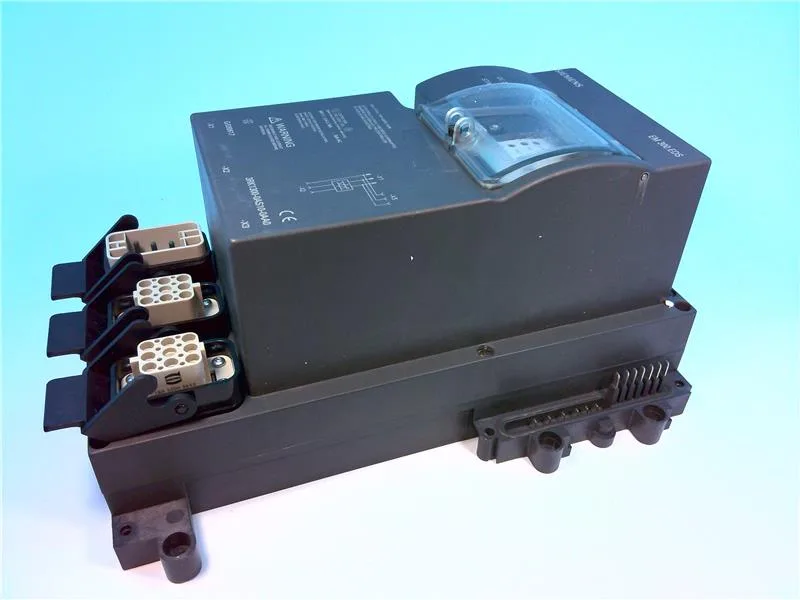
The Siemens 3RK1300-0DS01-0AA0 is an EM 300 DS electromechanical direct starter designed for the ET 200X distributed I/O system. It combines a motor starter, bimetal overload protection, and PROFIBUS DP communication in a single IP65-rated enclosure that mounts directly on the ET 200X backplane — no separate panel wiring for the motor branch. The setting range of 0.22 to 0.32 A covers the full-load current of small motors up to 0.09 kW at 400 V AC-3 duty. That AC-3 rating means it's sized for squirrel-cage induction motor starting — the load a direct starter sees on a conveyor, pump, or fan branch.
Rated operating voltage 400 to 500 V AC. Motor protection uses a bimetal thermal element. For branches with higher prospective fault current, coordinate with the specified circuit-breaker type. IP65 protection class lets the starter live in washdown zones or dusty environments — the enclosure keeps water jets and airborne particulates out of the electromechanical contacts and bimetal element. Operating temperature range of 0 to 55 °C covers most unventilated cabinet and field-mount conditions. Below 0 °C the bimetal trip curve may shift; the starter is not rated for freezer applications.
No screw terminals to torque; the tabs lock into the base unit. Dimensions of 140 mm wide by 270 mm high by 134 mm deep fit the ET 200X module footprint. Side-by-side mounting is standard for the series — no additional spacing required between units on the backplane. PROFIBUS DP connectivity is built in, not an add-on module. The starter communicates status, trip, and diagnostic data directly to the PLC over the fieldbus, reducing point-to-point wiring for the motor branch.