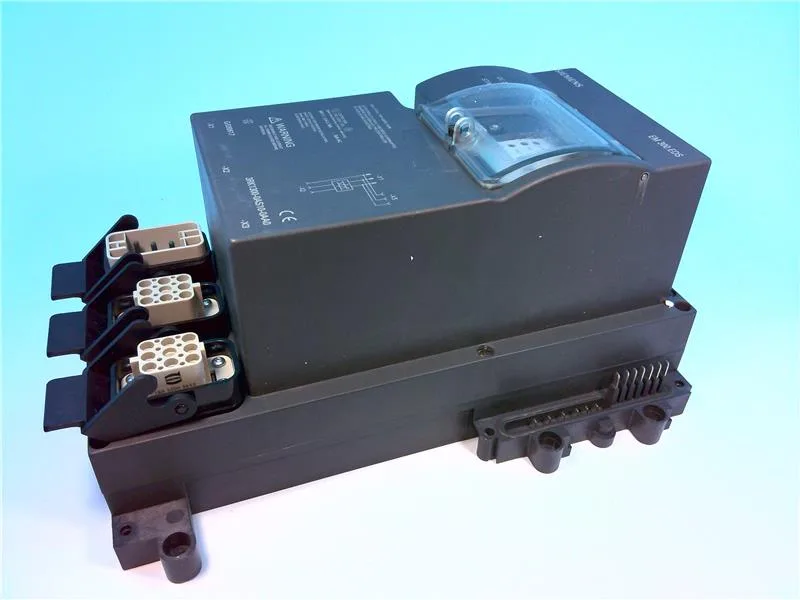
The Siemens 3RK1300-0GS01-1AA3 is an electromechanical reversing starter from the SIRIUS family, designed for motor control in distributed automation layouts. It carries a rated motor power of 0.18 kW at AC-3 duty at 400 V, with a setting range of 0.45 to 0.63 A via a bimetal overload relay. The unit is rated for an operating voltage of 400 to 500 V DC and includes an integrated motor brake output for internally supplied brakes. This is a reversing starter — meaning it contains two contactors mechanically interlocked to reverse a three-phase motor's direction — plus the overload protection and bus interface in one enclosure. It communicates over PROFIBUS DP, the fieldbus standard for Siemens ET 200X remote I/O systems, and is designed as part of the EM 300 RS series for the ET 200X platform. The 9-pole motor feeder and 9-pole power connection mate to the system's backplane, so integration is a matter of snapping it onto the mounting rail and wiring the motor leads.
The AC-3 rating of 0.18 kW at 400 V defines the maximum induction motor load it can switch — that is a small motor, roughly a 0.25 HP equivalent, typical for a small conveyor, a dosing pump, or a valve actuator. The setting range of 0.45 to 0.63 A on the bimetal overload matches the full-load current of such a motor; you dial the actual motor FLA within that window. This is a relatively low SCCR, so the upstream protection (a circuit breaker or fuse) must be coordinated to keep fault energy within that limit. Ambient temperature range is 0 to 55 °C during operation.
Integration and mounting notes
It mounts onto the ET 200X backplane rail, not a standard DIN rail — the 9-pole connectors align with the system's power and communication bus. The main current circuit uses tab terminals, so you need mating receptacles for the motor and supply cables. The brake contact output is a separate circuit for internally supplied DC brakes — verify the brake coil voltage matches the motor's brake spec before wiring. The PROFIBUS DP connection passes through the backplane; no separate fieldbus wiring is needed if the ET 200X head is already on the network.