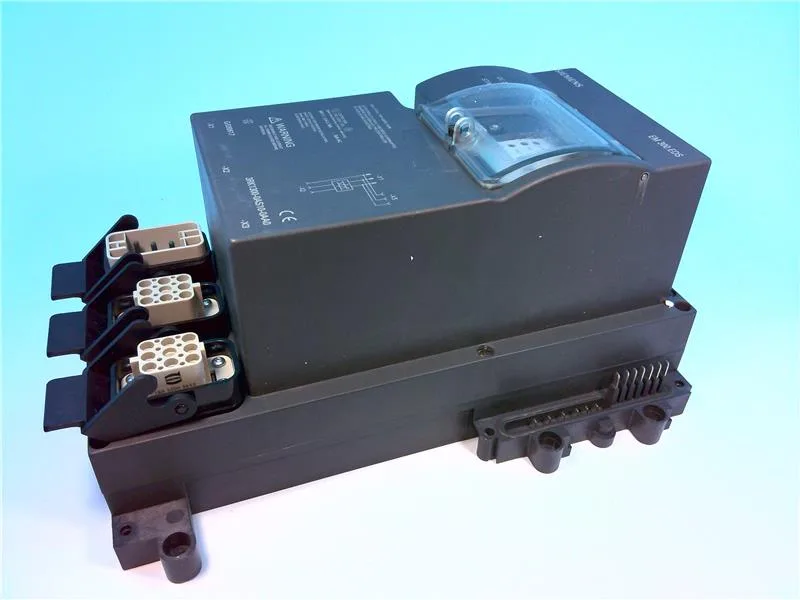
The Siemens 3RK1300-1CS01-0AA1 is an EM 300 DS electromechanical direct starter designed for the ET 200X distributed I/O system. It integrates motor starting, bimetal overload protection, and PROFIBUS DP communication into a single IP65-rated enclosure, eliminating the need for a separate control cabinet in washdown or dusty environments. The setting range of 1.8 to 2.5 A matches the motor full-load current, and the bimetal overload relay provides Class 10 or 20 thermal protection — the same curve used in conventional SIRIUS contactor-overload combinations.
PROFIBUS DP and brake control
Built-in PROFIBUS DP protocol allows the starter to be addressed directly from the fieldbus network — start, stop, and overload reset commands travel over the bus, and diagnostic data (thermal state, trip status) returns without additional I/O wiring. This makes the part a drop-in motor actuator for a distributed control architecture, not just a standalone starter. The integrated motor brake output (DC 24 V / 3 A) supplies an externally mounted holding brake, typically used on vertical-axis conveyors or gantry drives. The contact is rated for inductive DC loads; verify free-wheel diode polarity on the brake coil before commissioning.
Short-circuit coordination and selectivity
For Type 1 or Type 2 coordination, the manufacturer specifies circuit-breakers as the short-circuit protection device — not fuses — so the panel design should account for that when sizing the feeder.