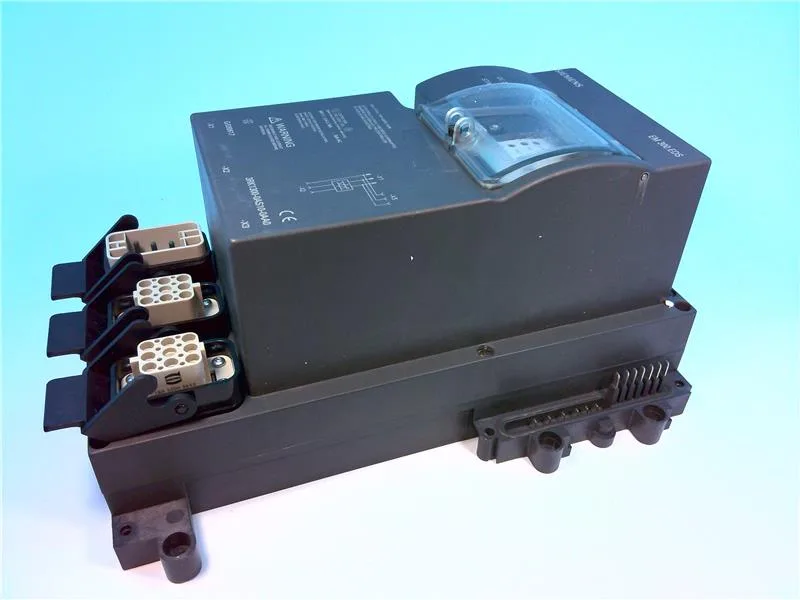
The Siemens 3RK1300-1FS01-0AA1 is an EM 300 DS electromechanical direct starter from the SIRIUS family, designed for the ET 200X distributed I/O system. It combines a contactor, bimetal overload relay, and PROFIBUS DP communication into a single IP65-rated enclosure — one part number handles the motor switching, protection, and fieldbus link for a small motor branch.
The setting range of 3.5 to 5 A and the AC-3 rating of 1.9 kW at 400 V define the motor it can drive — a standard three-phase induction motor up to that power. The bimetal overload provides Class 10 or similar thermal protection, so it matches the starting characteristics of a typical pump, fan, or conveyor motor in that power band. Operating voltage of 400 to 500 V AC covers the common European 400 V three-phase supply and the North American 480 V system. The integrated motor brake output (DC 24 V / 3 A) supplies an externally mounted brake — common on vertical-axis conveyors or hoist drives where the load must hold position when power is removed. That saves an external brake rectifier and relay.
The 3RK1300-1FS01-0AA1 is a direct starter for the Siemens ET 200X distributed I/O system — it mounts on the ET 200X motor starter rail, not on a standard DIN rail. The 140 mm width, 270 mm height, and 134 mm depth are the envelope for that rail system. Main circuit connections use tab terminals, so the wiring is a quick-connect plug rather than screw terminals. Because it carries PROFIBUS DP onboard, the starter communicates motor status, current draw, and fault data directly to the PLC without a separate I/O module or hardwired feedback. The bus cable daisy-chains through the ET 200X rail.