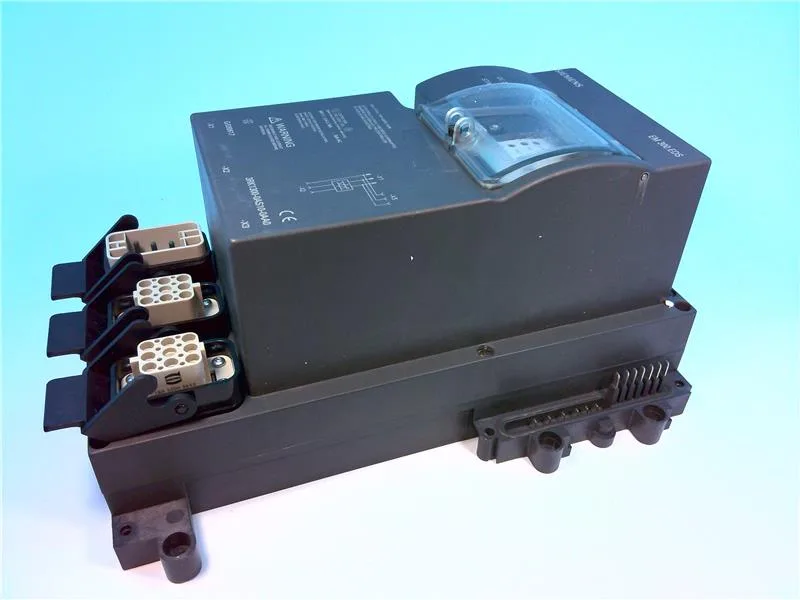
The Siemens 3RK1300-1GS01-1AA1 is an electromechanical reversing starter from the SIRIUS family, designed for the ET 200X distributed I/O system. It combines a reversing contactor pair with a bimetal overload relay in a single IP65 enclosure, rated for 2.2 kW at AC-3 duty on a 400 V supply. The thermal overload setting range is 4.5 to 6.3 A, which means it protects motors drawing full-load current in that band — the bimetal element tracks motor heating and trips the contactor on sustained overcurrent. The operating voltage range is 400 to 500 V AC, and the control voltage is DC — typically 24 V DC for the coil, though the evidence specifies DC type without a voltage value. The main circuit connects via tab terminals, common for quick-connect harnesses in distributed installations.
PROFIBUS DP communication and brake output
This reversing starter includes PROFIBUS DP protocol support, so it communicates directly with a PLC over the fieldbus without a separate gateway module. The bus connection carries start, stop, direction, and fault status signals, reducing point-to-point wiring in the panel. The unit also has a motor brake output rated for DC 24 V / 3 A, intended for externally supplied holding brakes on vertical-axis or high-inertia loads. The brake contact is integrated into the starter, so the brake releases when the motor contactor closes and engages when the contactor drops out. The 9-pole motor feeder and 9-pole power connection cables are part of the design — the starter ships with these connectors, so the installer terminates the motor cable and fieldbus drop, then plugs into the unit. This is a key difference from panel-mounted contactors that require individual wiring to terminals.
Short-circuit protection and breaking capacity
Short-circuit protection is designed for circuit-breakers upstream, not fuses. For installations with higher available fault current, an upstream circuit-breaker or fuse must limit the let-through energy to within the starter's rating.
The enclosure measures 140 mm wide, 270 mm high, and 134 mm deep. These are the outer dimensions of the IP65 housing, not a DIN-rail footprint — the unit mounts directly to a machine frame or sub-panel via its own fixing points. The 140 mm width is narrower than a standard 19-inch rack bay, so multiple units can be ganged side-by-side on a mounting plate. The 134 mm depth includes the connector overhang, so allow clearance for cable bend radius behind the unit.
Ambient limits and operating conditions
Rated for ambient operation from 0 to 55 °C. Below 0 °C the bimetal characteristics shift, and above 55 °C the thermal trip curve derates — the starter still functions but the overload protection may trip earlier than the motor's actual thermal limit. For enclosures with multiple starters ganged together, factor in internal temperature rise to stay within this window.