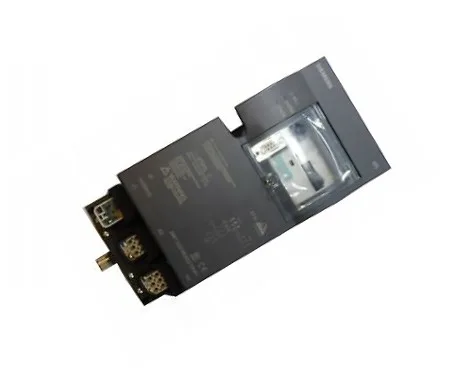
AS-i compact DOL starter for distributed motor control
The Siemens 3RK1322-0KS02-0AA4 is a SIRIUS AS-i compact direct-on-line starter — an electromechanical DOL starter with bimetal motor protection, rated 0.37 kW at AC-3 400 V, and a setting range of 0.9 to 1.25 A. It integrates the motor starter, overload relay, and AS-interface bus communication into a single IP65 enclosure, so it mounts directly on the machine frame or conveyor section without a separate control panel. The bimetal overload element provides Class 10 motor protection against sustained overcurrent, with the trip curve set by the 0.9-1.25 A adjustment range.
IP65 enclosure and field-mount integration
The housing measures 270 mm high by 120 mm wide by 190 mm deep, with tab terminals for the main current circuit and a 9-pole motor outgoing feeder plus 9-pole power connection. The ambient operating range of -25 to +55 °C covers unheated factory bays and refrigerated areas; no derating is required within that band for the bimetal trip curve.
Integrated brake contact and AS-i bus
A motor brake output is built in — rated 500 V DC / 1 A — so holding brakes on vertical-load axes (hoists, gantries, vertical conveyors) can be controlled directly without an external brake rectifier or contactor. The AS-interface protocol is onboard, with two integrated inputs for local sensors or pushbuttons; PROFIBUS DP is not supported on this variant.