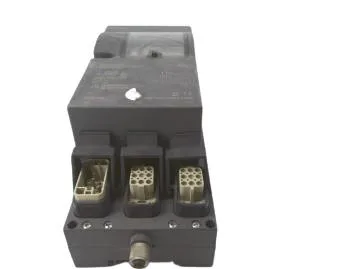
The Siemens 3RK1322-1FS02-0AA0 is an AS-Interface compact starter — a fully integrated electromechanical direct-on-line (DOL) motor starter in an IP65 enclosure, designed for distributed installation close to the motor rather than inside a central control panel. It combines a contactor, a bimetal overload relay, and short-circuit protection (via upstream circuit-breakers) in one unit, with AS-Interface bus communication for control and feedback.
Rated operating power of 1.9 kW at 400 V AC-3 means this starter is sized for a standard 2.2 kW (3 HP) induction motor under normal starting duty — the AC-3 category covers squirrel-cage motors during starting and switching off while running, not plugging or inching. The setting range of 3.5…5 A (full-scale 5 A) allows the bimetal overload relay to be adjusted to the motor's full-load current within that window. The ambient temperature range of -25 to +55 °C during operation covers most industrial environments but note that the bimetal trip curve derates above 40 °C; the 55 °C limit is the survival ceiling, not the calibration point.
This is a distributed I/O / motor starter node on an AS-Interface network — it connects directly to the AS-i yellow cable (profile S-7.A.7) and communicates start/stop commands and feedback signals without a separate I/O block. The 9-pole motor outgoing feeder and 9-pole power connection use tab terminals, so the wiring is plug-in rather than screw-clamp. Two integrated inputs accept limit switches or pushbuttons at the point of use, reducing home-run wiring back to the panel.