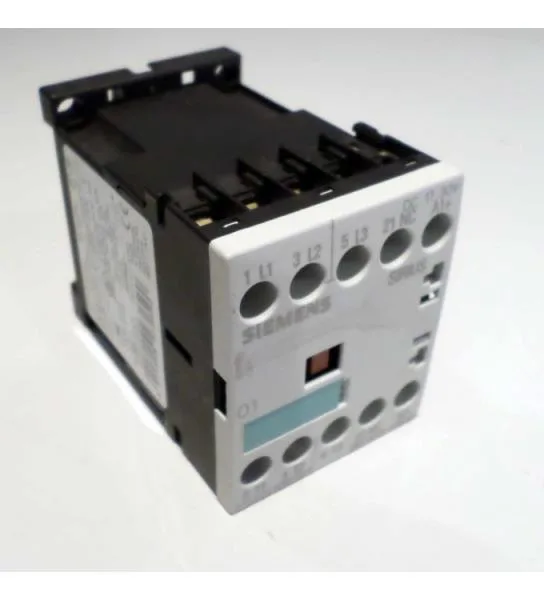
What it is and where it fits
The Siemens 3RT1015-1AC11 is a SIRIUS power contactor in the Size S00 frame. It's a three-pole, normally-open (3 NO) main contact block, designed for switching motor loads and general power circuits in control panels. The 24 V, 60 Hz coil keeps it in the standard low-voltage control scheme, common across industrial lines. It snaps onto a 35 mm DIN rail per DIN EN 50022, and the 45 mm width means it fits neatly in a crowded panel without hogging space. Screw terminals on both main and auxiliary circuits give you a solid, vibration-resistant connection — important out here in the grease where a loose lug means a call-back.
What the ratings mean for the buyer
The 10 A rating at 24 V on the auxiliary contacts (AC-12 duty) tells you it can handle typical PLC or relay loads in the control circuit without welding contacts. The 6 A at 230 V and 3 A at 400 V on the main poles give you the motor-switching capability for small pumps, fans, or conveyors up to about 3.5 kW at 500 V or 4 kW at 690 V. Type 1 and Type 2 coordination fuse requirements are specified — 35 A gL/gG for Type 1, 20 A for Type 2. That means you can size your upstream protection knowing the contactor will clear a fault without welding shut, which keeps your SCCR path clean for the panel builder. IP20 on the front and terminals means it's protected against finger contact but not washdown — keep it inside a closed panel, not out on the machine frame where coolant spray hits it.
Integration notes
Operating temperature range is -25 to +60 °C, so it handles the heat inside a sealed panel near a motor starter or drive. Pollution degree 3 means it's rated for conductive dust and humidity — typical for industrial floors, not clean rooms. Wire sizes accepted: solid or stranded from 0.5 mm² up to 4 mm² on the main terminals, with AWG equivalents 20 to 12. The screw terminals accept two conductors per clamp, handy for daisy-chaining control power. Side-by-side mounting is allowed, so you can gang multiple contactors on the same DIN rail without derating for heat buildup — just watch your total panel fill factor.
