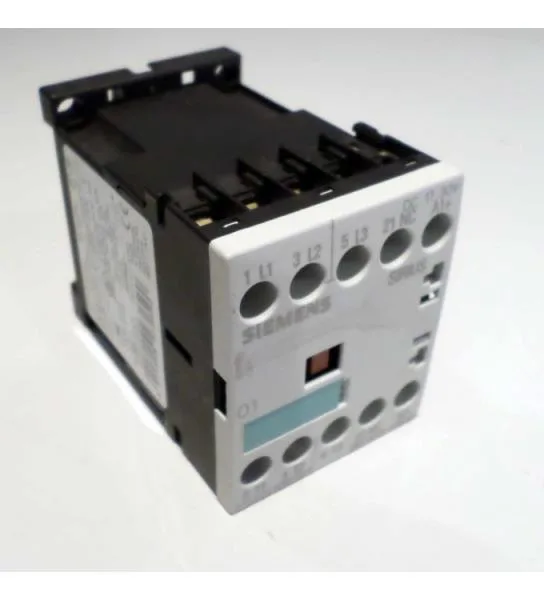
AC-12 at 10 A covers resistive loads like heaters and incandescent lamps; if you're switching motor loads, the AC-3 rating is what governs — and that's where the S00 frame typically lands around 5.5 kW at 400 V. DC switching is where this part earns its keep in mixed-load panels: 10 A at 24 V, 2 A at 60 V, 1 A at 110 V, 0.3 A at 220 V, and 6 A at 230 V AC. That DC curve matters when you're breaking solenoid valves or DC brake coils — the arc doesn't self-extinguish the way AC does, so the contact gap and material are designed for it. The screw terminals accept 2x (0.5 to 1.5 mm²), 2x (0.75 to 2.5 mm²), or max 2x (0.75 to 4 mm²) — fine for control wiring up to 4 mm² for short power runs.
For Type 2 coordination (contactor remains operational after a fault), it's gL/gG 20 A. That's the difference between a nuisance trip that clears and a blown contactor that needs replacement — specify the right coordination class for your maintenance strategy.
Mechanical endurance and environment
Rated for 30 million mechanical cycles typical — that's the unloaded life. Electrical life depends on the load current and duty cycle, but the mechanical figure tells you the coil and armature assembly are built for high-frequency cycling in applications like conveyor indexing or packaging machinery.