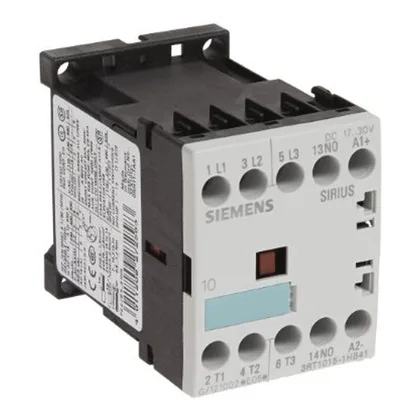
It switches 10 A at 24 V (AC-12) and carries motor ratings of 3.5 kW at 500 V and 4 kW at 690 V.
The 24 VDC coil draws 2.3 W both on closing and holding — no power penalty for keeping it engaged. The integrated diode suppresses the inductive kickback from the coil, which matters when the contactor shares a DC supply with sensitive electronics like a PLC output card. Without that diode, the flyback voltage can couple noise into the 24 V bus. In AC-4 (reversing or plugging) at 400 V, it handles 6.5 A. The AC-1 resistive rating reaches 20 A at 400 V. These numbers define the real load envelope — the AC-3 figure governs most conveyor and pump starts. Short-circuit coordination is specified: type 2 coordination requires a 20 A gL/gG fuse; type 1 allows up to 35 A gL/gG. If the panel design calls for type 2 to minimize downtime after a fault, the 20 A fuse limit is the binding constraint on upstream protection.
Screw terminals accept solid conductors from 0.5 mm² up to 4 mm² (max 2x 4 mm² per clamp).