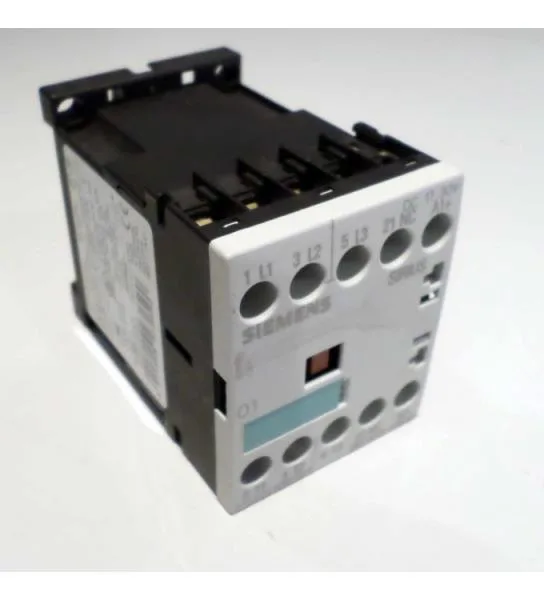
Rated for AC-3 duty at 400 V, it handles motor loads up to 7 A, which translates to about 3 kW at 500 V and 4 kW at 690 V. For resistive loads (AC-1), the maximum operating current is 10 A. The contactor also carries AC-2 and AC-4 ratings: 3 kW at 400 V for AC-2 (slip-ring motor starting), and 6.5 A at 400 V for AC-4 (plugging/reversing duty).
The 45 mm width, 60 mm height, and 73 mm depth make it a compact fit for dense DIN-rail layouts. The front face carries IP20 protection (finger-safe terminals), and the terminals themselves are also IP20. The spring-loaded terminals accept solid or stranded conductors from 0.25 to 2.5 mm² (2x per clamp), or AWG 24 to 14. Strip length is standard for spring-clamp terminations.
For Type 1 coordination (contactor may need replacement after a fault), the fuse rating goes up to 35 A. This matters when you're sizing the upstream protection for a motor branch circuit — use the Type 2 value if you want to avoid replacing the contactor after a fault. Electrical life depends on the switching duty (AC-3 vs AC-4) and the actual current switched, but the mechanical figure gives you a ceiling for how long the armature and springs will hold up.