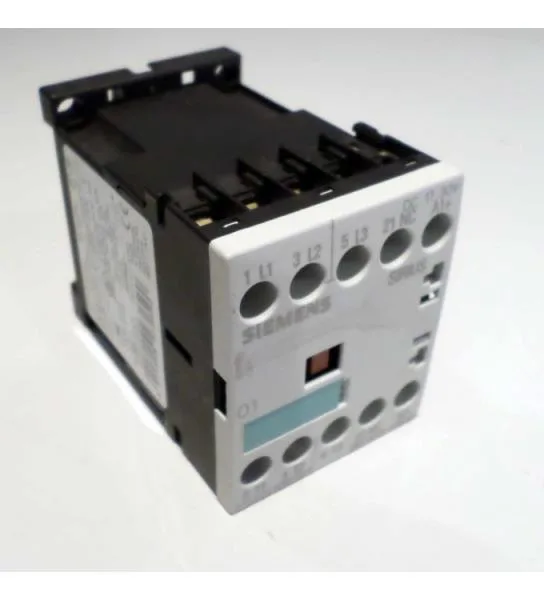
Rated 10 A at 24 V, it also carries 6 A at 230 V and 3 A at 400 V, covering common line voltages. The AC-2 rating at 400 V is 3 kW, and the AC-4 rating at 400 V is 6.5 A — the AC-4 figure is the one that governs reversing or inching duty where the contactor makes and breaks the motor current every cycle. Spring-loaded terminals on the main circuit accept 2x (0.25... 2.5 mm²) solid or stranded wire, or 2x (24... 14 AWG). No screw torque to check — strip to 8 mm, push in, done. The control circuit uses the same terminal type.
Pollution degree 3 means it handles conductive dust and condensation typical of industrial panels — no conformal coating required for most environments.
The mechanical life is 30,000,000 cycles — this contactor is rated for high-cycle applications like conveyor jogging or valve actuation where the contacts cycle many times per shift. The AC-12 operating current maximum of 10 A is the resistive load limit; stay under that for heater or lighting circuits. Type 1 and Type 2 coordination fusing is specified: a gL/gG 35 A fuse for Type 1 (contactor may be damaged but no fire risk), and a gL/gG 20 A fuse for Type 2 (contactor survives the fault). Use the Type 2 rating if you need to avoid replacing the contactor after a short circuit. No auxiliary contact blocks are integrated — the instantaneous contact count is zero. If you need N.O./N.C. signaling, order a separate side-mount auxiliary switch block from the SIRIUS range.