For AC-3 (squirrel-cage motors, the most common category), the 3 kW AC-2 figure is a conservative proxy; the actual AC-3 rating would be higher, but the datasheet doesn't break it out separately here.
Mounting and integration into a panel
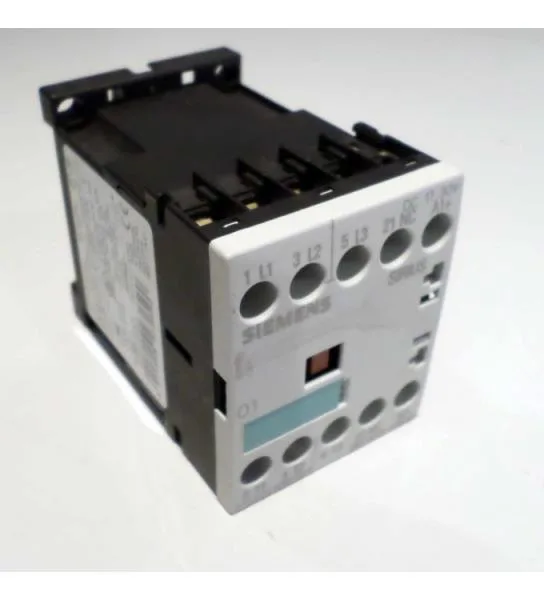
The 45 mm width and 60 mm height fit neatly into a 12-module row on a 600 mm wide gland plate, leaving room for a motor-protective circuit breaker and a terminal block alongside. Depth of 73 mm means it clears most 120 mm deep enclosures with space for wiring behind the rail. Spring-loaded terminals on the main circuit accept 2x (0.25 to 2.5 mm²) solid or stranded wire, or 2x (24 to 14 AWG). That's a standard range for motor circuits up to 4 kW — no need for ferrule adapters on the smaller sizes, but the double-wire entry is handy for daisy-chaining the line side through a disconnect.
Coil and control circuit — what the ratings mean
The holding current will be lower, but the inrush matters for sizing your 24 VDC power supply. If you're running a bank of these, sum the pickup currents to avoid a voltage dip that drops out adjacent contactors. Coil operates reliably across 0.85 to 1.1 times the rated voltage at both 50 Hz and 60 Hz. That's a 20.4 V to 26.4 V window — tight enough that a sagging 24 V bus from a long cable run could cause chatter. Keep the DC supply local or use a regulated rail.
Short-circuit protection and coordination
That's the standard choice for motor circuits where you want the contactor to survive a fault and be reusable. The 3 kW AC-2 rating at 400 V corresponds to roughly a 7 A full-load current for a 400 V motor — the 20 A fuse gives a 3:1 margin for starting inrush without nuisance blowing. For a 4 kW motor at 690 V, the same contactor handles it, but the fuse sizing should be checked against the motor nameplate FLA.