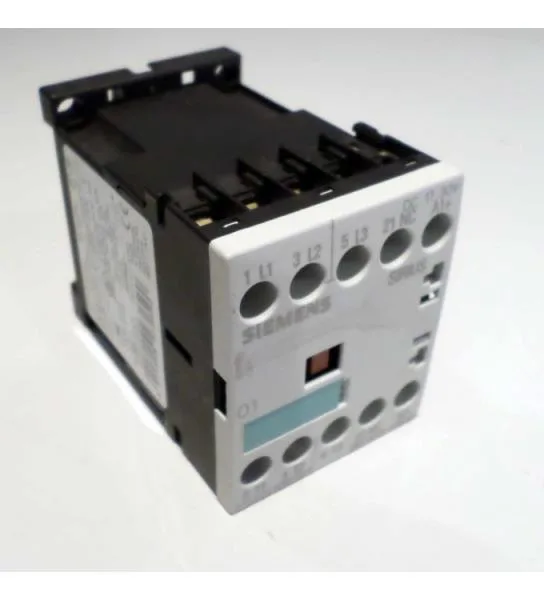
The contactor is rated for AC-3 duty at 400 V (3 kW) and AC-4 at 400 V (6.5 A), covering standard three-phase induction motor switching up to that power. Spring-loaded terminals on the main circuit accept 2x (0.25 to 2.5 mm²) solid or stranded, or 2x (24 to 14 AWG). That's a common panel wire range; no special ferrules needed unless your local code requires them for stranded.
The 10 A AC-12 maximum operating current (resistive load) sets the ceiling for general-purpose switching. For motor loads, the AC-3 rating at 400 V (3 kW) is the one that governs real use — that's a 4-pole induction motor up to about 6.5 A full-load current at 400 V. Switching capacity varies with coil voltage: at 24 V it's rated 10 A, at 60 V it's 2 A, at 110 V it's 1 A, at 220 V it's 0.3 A, at 230 V it's 6 A, at 400 V it's 3 A, at 500 V it's 3.5 kW, and at 690 V it's 4 kW. The 230 V and 400 V figures are the ones most relevant for European panel voltages. IP20 on the front and at the terminals means finger-safe against accidental contact, but the contactor is not sealed — it belongs inside an IP54 or higher enclosure if washdown or dust is present.
These are the values to use when sizing the branch circuit protection.