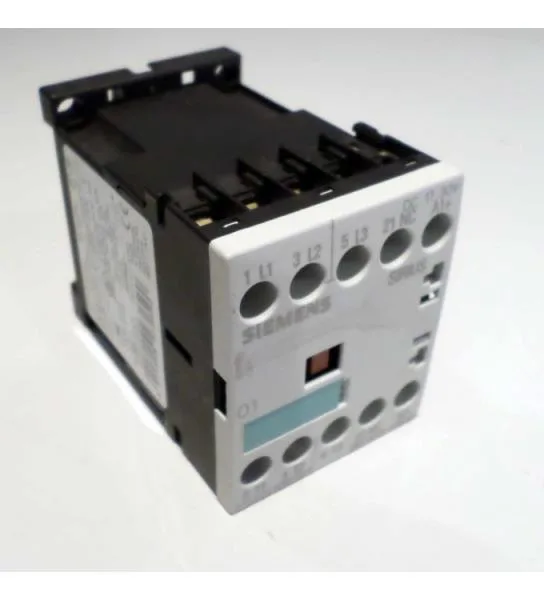
The coil is rated 125 V DC, with a pick-up ratio of 0.85 and drop-out ratio of 1.1. Closing and holding power are both 3.3 W DC. Main contacts are spring-loaded terminals (cage-clamp style), accepting 2x 0.25 to 2.5 mm² solid or stranded, or 2x 24 to 14 AWG. That saves panel-wiring time compared to screw terminals — no torque check, no loosening over thermal cycles.
Rated operational current at AC-12 (resistive) is 10 A maximum. For motor switching, the AC-2 rating at 400 V is 3 kW, and AC-4 at 400 V is 6.5 A — that covers reversing or plugging duty on smaller motors where high inrush and frequent switching are expected. DC switching capability is given per voltage: 10 A at 24 V, 2 A at 60 V, 1 A at 110 V, 0.3 A at 220 V. These are the make/break limits for DC loads, which arc harder than AC — so if you're switching DC solenoids or brakes, stay within these curves. AC switching at 230 V is 6 A, at 400 V is 3 A, at 500 V is 3.5 kW, and at 690 V is 4 kW. The 690 V rating is useful for 690 V line supplies common in mining or marine panels.
Width is 45 mm, depth 73 mm, height 60 mm. That means you can pack several S00 contactors on a rail segment without spacing gaps. Front and terminal protection is IP20 — finger-safe but not sealed. Mount inside a cabinet with at least IP54 for washdown areas.
This lets the panel designer choose between protection level and fuse economy. No instantaneous auxiliary contact is built in (0 auxiliary contacts). If you need feedback or status, add a separate auxiliary contact block that fits the S00 frame.