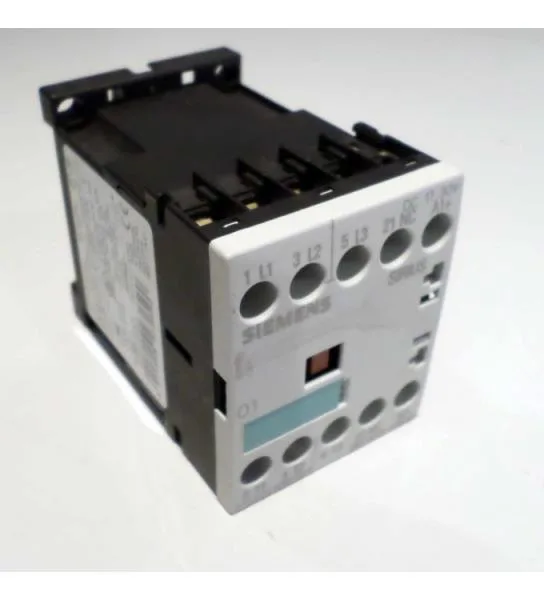
Main circuit connections use spring-loaded terminals accepting 2x (0.25 to 2.5 mm²) solid or stranded wire (24 to 14 AWG), which speeds wiring and eliminates periodic re-torquing common with screw terminals.
The contactor is rated for AC-12 switching at 10 A maximum — this is the resistive load rating, meaning it handles heaters, lamps, and transformer primaries up to that current. For motor duty, the AC-2 rating at 400 V is 3 kW, and the AC-4 rating (plugging/reversing) at 400 V is 6.5 A — the AC-4 figure is the one to watch for high-inertia or frequent-reversing loads, as it governs contact wear life. Auxiliary contact ratings cover DC switching: 10 A at 24 V, 2 A at 60 V, 1 A at 110 V, and 0.3 A at 220 V. These are the DC-13 values for solenoid/relay loads — the voltage derating is steep, so verify the auxiliary circuit voltage before committing the BOM. This is the spec the panel designer needs for the SCCR declaration.
The mechanical endurance is 30 million operations typical — this is the life limit for the coil and armature, not the contacts (electrical life depends on load and duty cycle).