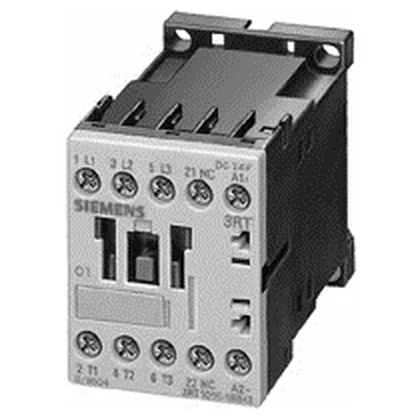
The contactor is rated for AC-2 duty at 4 kW at 400 V and AC-4 duty at 8.5 A at 400 V, covering slip-ring motor starting (AC-2) and plugging/reversing/inching (AC-4) applications. For AC-3 motor starting (squirrel-cage motors), it handles 4.5 kW at 500 V and 5.5 kW at 690 V.
Type 2 coordination (no welding after a short circuit) requires a 20 A gL/gG fuse upstream; Type 1 coordination (welding allowed but no fire risk) allows a 35 A gL/gG fuse. This matters for selectivity studies and SCCR compliance in the panel. Mechanical endurance of 30,000,000 cycles indicates the contactor is designed for high-duty-cycle applications such as conveyor systems or packaging lines where the contactor cycles frequently.
Both main current circuit and auxiliary/control circuit use screw-type terminals. The main terminals accept 2x (0.5 to 1.5 mm²), 2x (0.75 to 2.5 mm²), or max 2x (0.75 to 4 mm²) solid or stranded wire, or AWG equivalents of 2x (20 to 16), 2x (18 to 14), or 1x 12. The auxiliary contacts share the same wire range. The 45 mm width per contactor means up to 6 units fit in a standard 270 mm wide enclosure section.
For BOM freeze or PCN watch purposes, the part carries the reference code Q per IEC 81346-2, indicating its function as a power switching device in the system architecture. RoHS compliance is indicated by the substance prohibitance date of 01.07.2006.
Dimensions and Physical Fit
These dimensions are critical for panel layout — the 72 mm depth includes the terminal projection, so ensure at least 80 mm clearance behind the mounting rail for wiring access.