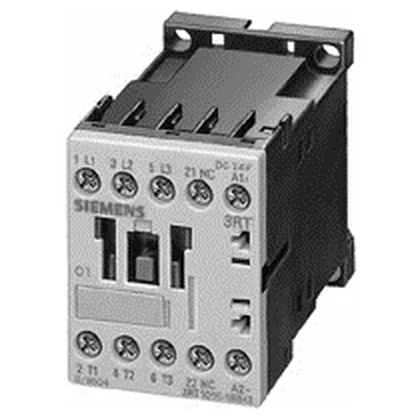
The Siemens 3RT1016-2AV02-ZX95 is a SIRIUS power contactor in the compact Size S00 frame — 45 mm wide, 60 mm tall, 73 mm deep — designed for screw or snap-on mounting onto 35 mm standard DIN rail per DIN EN 50022. The spring-loaded terminals on the main current circuit accept 2x (0.25 to 2.5 mm²) solid or stranded conductors, which means no screw-torque checks during panel build; strip and push is the wiring cadence. At 690 V the motor power reaches 5.5 kW, so this contactor can handle a 5.5 kW motor on a 690 V line if the duty cycle stays within the AC-3 envelope. DC switching is covered across multiple voltage points: 10 A at 24 V, 2 A at 60 V, 1 A at 110 V, 0.3 A at 220 V — these are the make/break limits for DC loads like brake coils or solenoid valves. The 30 million mechanical operations typical life suggests the contactor is sized for high-cycle applications; the failure mode is contact erosion, not coil burnout, if the AC-4 current is respected.
Side-by-side mounting is permitted with zero clearance, so the 45 mm width per pole is the only DIN-rail space consumed. The IP20 finger-safe terminal covers mean the panel builder can leave the front cover off during commissioning without exposing live terminals — standard for control cabinets. That is the sizing parameter for the upstream protection device in the motor branch circuit.