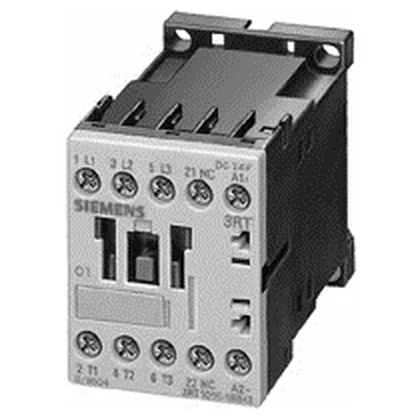
The screw-type terminals on the main current circuit accept 2x (0.5 to 1.5 mm²) solid or stranded, 2x (0.75 to 2.5 mm²), or up to 2x (0.75 to 4 mm²). For AWG, that is 2x (20 to 16) or 2x (18 to 14) or 1x 12. The terminal is rated IP20 — finger-safe once wired, but the front face of the contactor is also IP20, so it can sit in an open panel without an additional cover.
Motor Switching and Duty Ratings
For motor loads, the AC-2 rating at 400 V is 5.5 kW, and the AC-4 rating at 400 V is 8.5 A. At 500 V the motor power rating is 5.5 kW; at 690 V it is also 5.5 kW. The contactor is rated for both 50 Hz and 60 Hz operation, with the operating range spanning 0.8 to 1.1 times the rated voltage at 50 Hz and 0.85 to 1.1 at 60 Hz. The auxiliary contact block carries 10 A at 24 V, 2 A at 60 V, 1 A at 110 V, 0.3 A at 220 V, and 6 A at 230 V. That covers most PLC-level signal circuits and relay loads.
For Type 2 coordination (contactor remains operational after a fault), the fuse is gL/gG 20 A. This is a standard distinction — Type 2 is what most panel builders specify for production lines where downtime matters. Mechanical endurance is typical 30 million operating cycles — that is the mechanical life before the contactor wears out, not the electrical life under load. Electrical life will be shorter and depends on the switching current and duty class.
Same part, different passport — if you are comparing pricing across regions, this order code is the global Siemens part number. The 0MA6 suffix indicates a specific coil variant and auxiliary configuration; it is not a regional market code. Genuine is genuine regardless of which Siemens factory it came from.