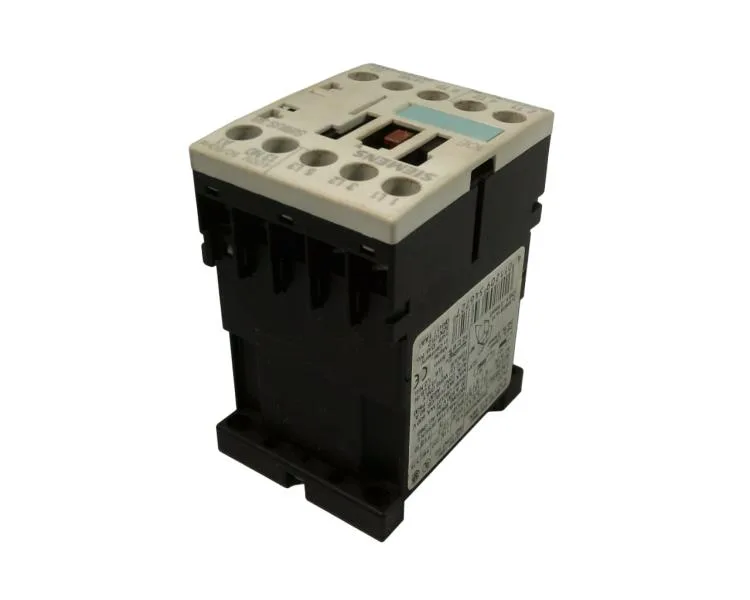
Rated for a 24 VDC coil, it carries 10 A at 24 V (AC-12 resistive load) and can switch motor loads up to 5.5 kW at 500 V or 690 V. For heavy-duty jogging or inching (AC-4 duty at 400 V), the rated operational current is 8.5 A — the figure that governs real reversing or plugging applications.
The AC-4 rating of 8.5 A at 400 V is the limiting value for frequent motor reversals or inching — the AC-3 rating (not listed here) would be higher, but AC-4 is the one that matters when the contactor sees high electrical wear. For coordinated protection, Type 2 coordination requires a gL/gG fuse of 20 A; Type 1 allows up to 35 A. These fuse limits define the maximum prospective fault current the contactor can clear without damage to downstream components. The contactor accepts solid and stranded conductors: 2x (0.5 to 1.5 mm²), 2x (0.75 to 2.5 mm²), and up to 2x (0.75 to 4 mm²) maximum, with AWG equivalents of 2x (20 to 16) and 2x (18 to 14) plus a single 12 AWG.
This contactor is a standard building block in motor control centers, conveyor drives, pump panels, and HVAC compressor starters. The size S00 frame keeps the footprint small — 45 mm wide — so it fits tightly packed DIN-rail assemblies. Side-by-side mounting is permitted, which means no mandatory spacing gaps between units, saving rail space in dense panels.
If a customer's AVL requires a functionally equivalent alternate, the 3RT1017-1AP01 is the closest peer — same size S00 frame, same 24 VDC coil, same screw terminals, and same 45 mm width. The difference is in the auxiliary contact configuration; verify the customer's wiring diagram before substituting. Any change from the specified order code should follow the customer's deviation process.