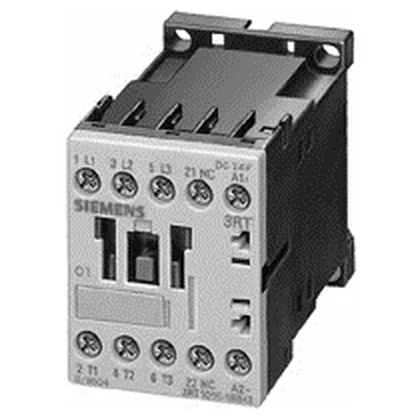
The coil draws 3.3 W to close and holds at 3.3 W. Rated for AC-3 duty at 5.5 kW on both 500 V and 690 V supplies, so it handles a standard 400 V class motor without derating.
The 10 A rating at 24 V is for the auxiliary contact — that's the load it can switch on a 24 VDC control circuit. The 6 A at 230 V and 3 A at 400 V are the main contact ratings for resistive or light inductive loads; for motor loads, use the AC-3 kW figures. Screw-type terminals on the main circuit accept 2x 0.5 to 1.5 mm² solid, 2x 0.75 to 2.5 mm² stranded, or up to 2x 4 mm². That covers most panel wiring from signal-level to motor feeders. The auxiliary contact is a single instantaneous make/break — no timed or latching option built in. IP20 on the front and terminals means it's finger-safe but not washdown-rated; keep it inside the panel.
Side-by-side mounting allowed with 6 mm spacing. Height 57.5 mm, depth 72 mm. For type of coordination 2 (limited damage under short circuit), use a 20 A gL/gG fuse upstream. For type 1 (no damage to the contactor but may need replacement), a 35 A gL/gG fuse is acceptable. That's the selectivity decision for your panel designer.