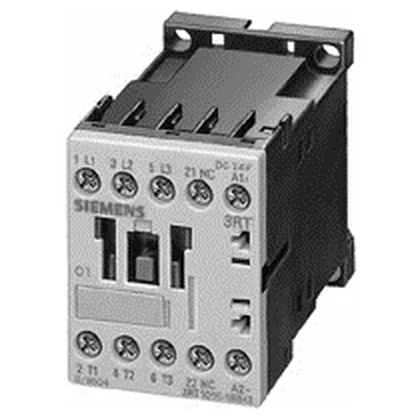
The main circuit uses spring-loaded terminals, so no screwdriver torque spec to remember — strip, push, done. Accepts 2x (0.25 to 2.5 mm²) solid or stranded, or 2x (24 to 14 AWG). At 45 mm wide, 60 mm tall, and 73 mm deep, it's a tight fit for crowded panels. Side-by-side mounting is allowed with zero gap, which saves rail space.
The headline 10 A rating is under AC-12 duty, which covers resistive loads like heaters and control transformers. If you're reversing or plugging (AC-4), the contactor is rated 8.5 A at 400 V — lower than AC-3 because of the higher electrical wear from frequent make/break under full load. The coil pulls in reliably at 24 VDC. It's rated for 50/60 Hz operation with a voltage tolerance of 0.85 to 1.1 times the rated value — so a 24 V coil stays pulled in down to about 20.4 V and up to 26.4 V, which covers most industrial DC supplies even under brownout. For Type 2 coordination (minimal damage to the contactor under fault), the evidence specifies a gL/gG fuse of 20 A.
Auxiliary contacts and environmental limits
It carries one instantaneous auxiliary contact (NO or NC — the evidence doesn't specify polarity, so check the terminal marking). The auxiliary contact is rated across voltages: 10 A at 24 V, 6 A at 230 V, 3 A at 400 V, and 0.3 A at 220 V. That last figure at 220 V is the DC switching limit — important for pilot-duty circuits on DC control buses. Mechanical endurance is 30 million operating cycles, which is standard for the S00 frame — you'll wear out the coil or auxiliary contacts long before the main mechanism fails. Front and terminal protection is IP20 — finger-safe but not washdown. The side clearance for mounting is 6 mm, so plan for that if you're not doing zero-gap side-by-side.