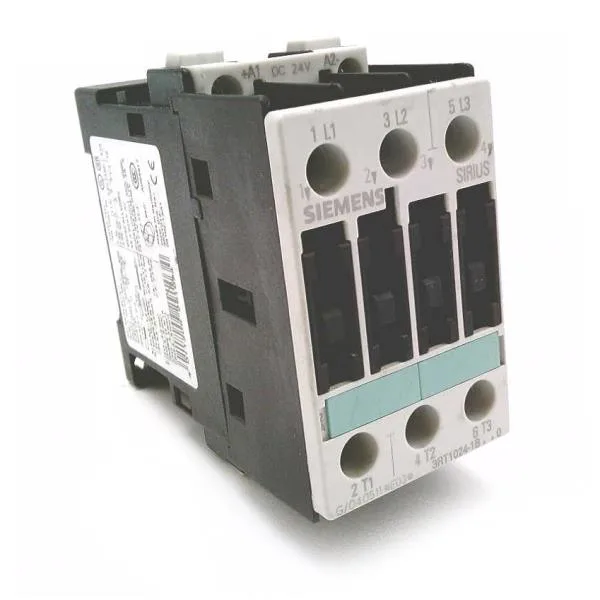
The 24 VDC coil pulls in reliably; the auxiliary contact block handles 10 A at 24 V, 6 A at 230 V, and 3 A at 400 V — enough for feedback to a PLC or to latch the holding circuit. For motor duty, this contactor is rated at 7.5 kW at both 500 V and 690 V, and it's specified for AC-2 (slip-ring motor starting) and AC-4 (plugging/inching) loads — 5.5 kW and 12.5 A respectively at 400 V. That means it handles the high-stress switching of reversing or jogging applications, not just straight run-up.
The 45 mm wide body fits a standard DIN-rail footprint. Depth is 140 mm, height 85 mm — check your enclosure depth before you start wiring; some shallow gland plates will be tight. Side-by-side mounting is allowed with a 6 mm gap to the side for airflow and arc clearance. Main circuit terminals accept solid or stranded wire: 2x (1 to 2.5 mm²) or 2x (2.5 to 6 mm²), with a maximum of 2x 10 mm². Auxiliary terminals are sized for 2x (0.5 to 1.5 mm²) or 2x (0.75 to 2.5 mm²), max 2x 4 mm². That covers most panel wiring without needing adapters. The front of the contactor is IP20, the terminals themselves are IP00 — standard for enclosed panel installation.
This matters when you're coordinating with upstream protection in a distribution board. Mechanical life is quoted at 10 million operations typical — that's a lot of cycles for a conveyor or pump start/stop application. The electrical life will be lower depending on the load current and duty cycle, but the mechanical endurance gives you a sense of the build quality.